
A plate of plain black bean tacos stared back at me last Tuesday and I realized I had gone completely bored with my own cooking. This curtido recipe ended that streak fast. I needed crunch, I needed acid, and I needed both without an hour of chopping.
I used to think a proper Salvadoran slaw demanded deep ancestral knowledge, but pouring boiling water over cabbage turns out to be the only real technique involved. I have ruined plenty of side dishes by overthinking them, and this one stays remarkably resilient through every shortcut I throw at it. Here is exactly how I do it.
reader review
“Crunchy Crunchy and Crunchy. I made this curtido recipe on a Sunday and by Tuesday the whole jar tasted absolutely electric. Poured it over pork tacos and my whole family went back for more. The jalapeño with seeds gave it the perfect kick” – Marisol V.
Loved this too? Add your reviewWhy You’ll Love This Recipe
- Zero actual cooking. Pouring boiling water over shredded cabbage is the hardest technical step in the entire recipe.
- Budget friendly. Half a head of cabbage, two carrots, and a splash of white vinegar cost less than a dollar at any grocery store.
- Fridge stable. The slaw improves every day it sits in a sealed jar, which makes it one of the best prep-ahead condiments in a weekly rotation.
- Cuts through heavy meals. The sharp vinegar bite balances rich meats, fatty cheeses, and anything warm and dense that needs a cold, acidic counterpart on the plate.
Tools You’ll Need
Nothing fancy, I promise.
- fine mesh strainer – You need this to drain the cabbage properly after the hot water bath.
- Electric kettle – A regular pot works fine, but a kettle boils water much faster.
- Glass jar with a tight lid – Plastic containers absorb the onion smell forever.
Ingredients
❤
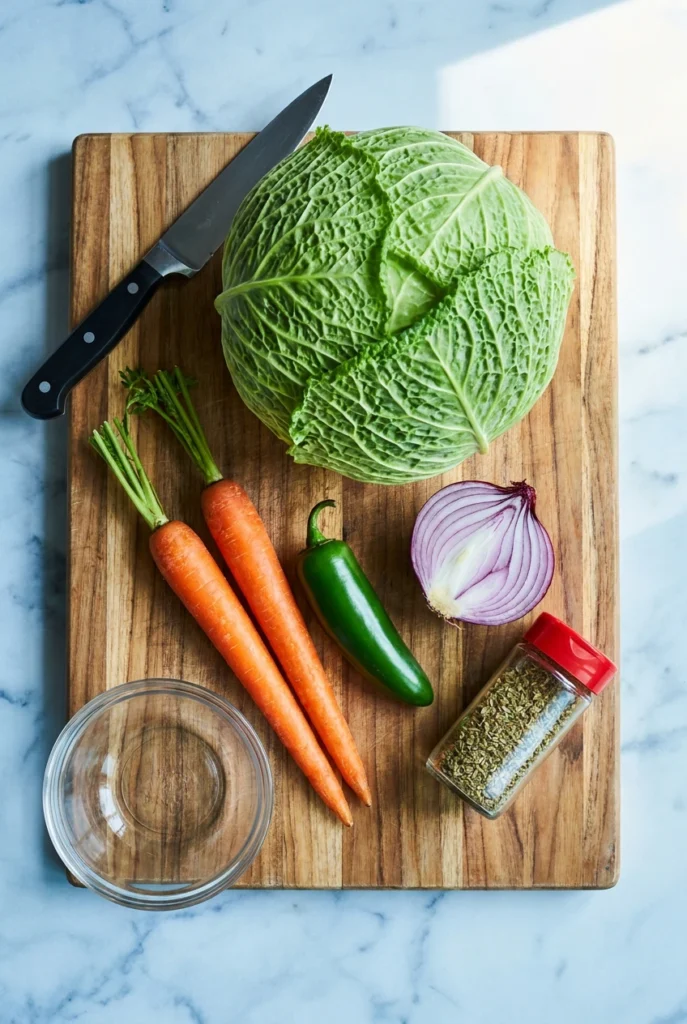
- Green cabbage. Half a head gives you the right volume. You slice it as thin as your knife allows, because thick shreds feel tough and never fully absorb the marinade.
- Red onion. A half onion sliced paper-thin softens quickly in the vinegar and adds a sharp, purple bite that mellows after a few hours.
- Carrots. Two medium carrots grated on a box grater add sweetness and color without any extra chopping.
- Jalapeño pepper. One fresh jalapeño adds heat and crunch. You keep the seeds in for a full kick or scrape them out for a milder result.
- Dried oregano. Half a teaspoon rubbed between your fingers before it hits the bowl releases the oils and gives the slaw its distinctly Salvadoran herbaceous note. Mexican oregano tastes more citrusy and floral than Mediterranean oregano and fits this recipe better.
- White vinegar. Half a cup provides the classic sharp tang that defines curtido. Apple cider vinegar works as a substitute and gives a slightly softer, fruitier background note.
Instructions
You skip the cold water rinse at your own risk, unless warm soggy cabbage sounds appealing.
- Boil the water. Bring 4 cups of water to a boil, and a kettle speeds this along.
- Wilt the cabbage. Set the cabbage in a fine mesh strainer and pour the boiling water over it slowly. Rinse it with cold water right after, then drain it well and press out as much liquid as you can. Cabbage left soaking wet waters down the whole dish.
- Mix it together. Add the cabbage to a large bowl along with the carrot, onion, jalapeño, oregano, and vinegar, then toss it all to combine. Shaking the mix aggressively in a lidded container works as well, and it feels weirdly therapeutic.
- Let it rest. This curtido recipe tastes best after several hours of marinating. Patience runs hard here, but waiting at least two hours makes a real difference.
- Pack it away. Store the curtido in a covered container or mason jar for up to a week in the fridge. The cabbage softens over time, and that slightly looser crunch stays perfectly fine.
Seasoning and Taste as You Go
Taste the mixture after it sits for an hour. The vegetables absorb a lot of liquid.
- Too flat? Add a heavy pinch of salt. Cabbage needs more salt than you think.
- Too sharp? Add a tiny pinch of sugar to take the edge off the vinegar.
- Needs depth? Add a little more dried oregano and let it sit overnight.
♥ The Misfit Tips!
- Slice thinner than feels necessary. I chopped my cabbage into half-inch strips the first time and the whole batch felt like a tough, resistant salad instead of a delicate slaw. You use a mandoline at the thinnest setting or take your time with a sharp knife to get the cabbage as thin as possible.
- Press the water out hard. You push the wilted cabbage against the strainer with real pressure. Any water left in the shreds dilutes the vinegar and produces a flat marinade that never develops proper tang.
- Understand the fermented option. Several curtido recipes fermented on the counter produce a more complex, deeply sour result than the quick version because live cultures have time to develop. The fridge method in this article gives you the same tangy brightness in two hours instead of two days, which suits most weeknight cooking timelines better.
Make It Yours
This curtido recipe handles substitutions and additions without losing its character.
- Spice level. You swap the jalapeño for a serrano pepper if you want a noticeably sharper, hotter result. You skip the pepper entirely for a completely mild version.
- Herb swap. You toss in a handful of fresh cilantro right before serving if dried oregano does not appeal to you. Fresh herbs go in at the last moment so they do not wilt overnight in the jar.
- Vinegar options. You use apple cider vinegar for a slightly fruitier background note, or rice vinegar for a gentler, more neutral acidity that suits pairing with lighter proteins.
- Add radishes. Thinly sliced radishes add a peppery crunch and a bright pink color that makes the jar look as good as it tastes.
Perfect Pairings
This curtido needs rich, heavy mains to really earn its place on the table.
- Cheese pupusas or thick corn tortillas, where the sour crunch cuts straight through the melted dairy and masa.
- Slow-cooked pork shoulder tacos that need something cold and sharp to balance the fatty richness.
- A cold Mexican lager with a lime wedge rounds out a plate of curtido and pork without competing with either.
Taco Tuesday dinners suit this slaw perfectly because you make the jar on Sunday and it only gets better by midweek.
Troubleshooting Guide
Something went sideways? Been there. Here is how to fix it.
- Problem: my slaw is watery
Why it happened: You did not press enough water out of the cabbage after the hot water rinse.
Fix it: Drain the excess liquid from the bowl, add another splash of vinegar, and toss it again.
- Problem: it tastes too sour
Why it happened: Your vinegar ratio was too high for your personal preference.
Fix it: Stir in a half teaspoon of sugar or honey to balance the harsh acidity.
- Problem: the cabbage is mushy
Why it happened: You left the hot water on the cabbage for too long without rinsing it with cold water.
Fix it: You cannot un-cook cabbage. Serve it anyway, call it a soft relish, and rinse it faster next time.
How to Store Curtido
❤
- Fridge. You keep the curtido in a tightly sealed glass jar for up to one week. The flavor improves through day three and holds steady after that.
- Freezer. You skip the freezer entirely. Freezing destroys the cell structure of the cabbage and thaws into a watery, limp version of itself that no vinegar can save.
- Serving temperature. You serve curtido cold straight from the fridge or at room temperature. You never heat it.
- Note. Red onion turns the entire jar a bright magenta pink after about two days. The color change is normal, harmless, and actually makes the jar look better on the fridge shelf.
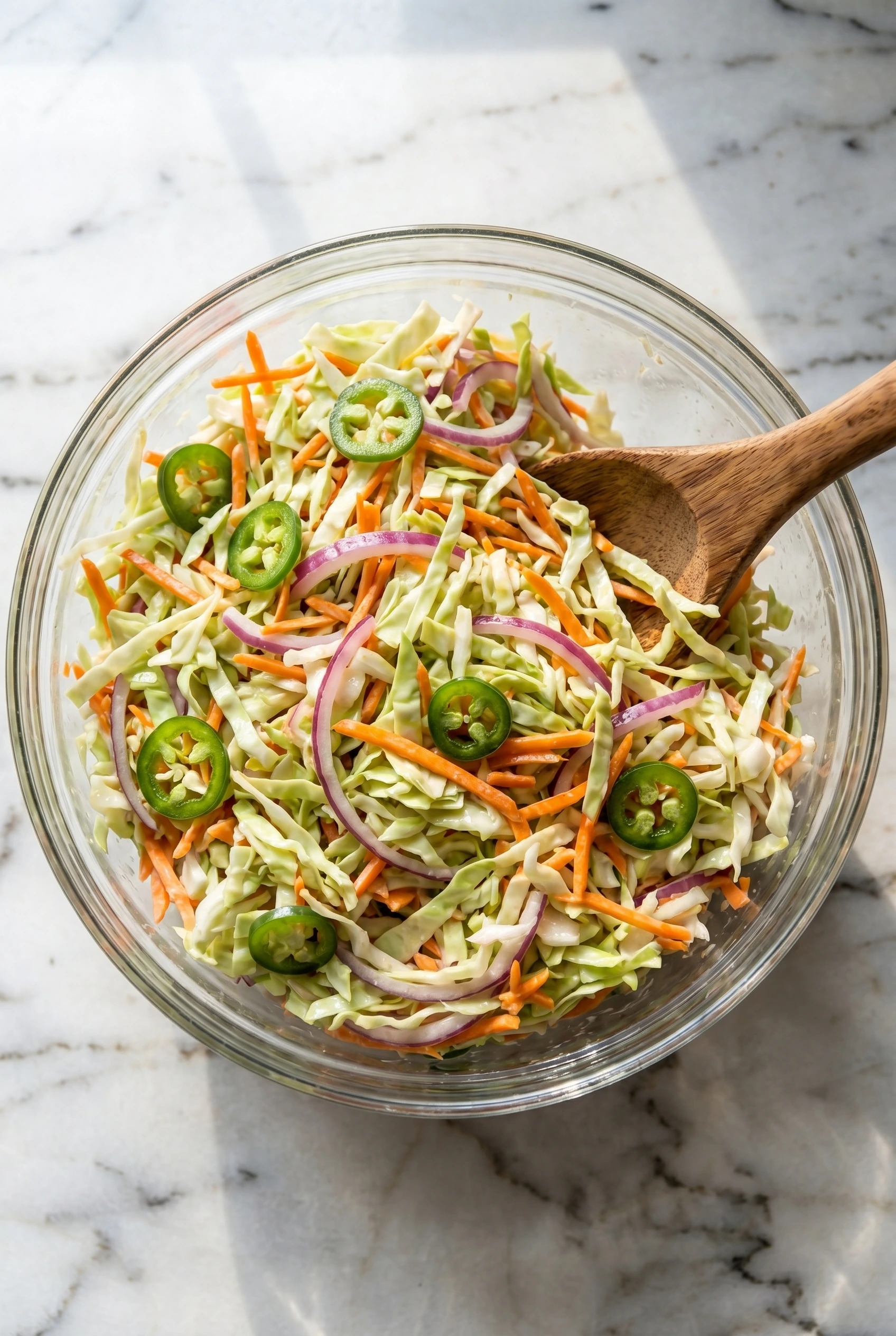
Curtido
Ingredients
Equipment
Method
- Boil the waterYou fill a kettle or small pot with four cups of water and bring it to a full boil. A kettle handles this in three minutes. A stovetop pot takes closer to eight minutes, and both work equally well for the pour.
- Wilt the cabbageYou place the shredded cabbage in a fine mesh strainer set over the sink or a large bowl. You pour the boiling water over the cabbage slowly and evenly so every shred gets contact with the hot water. The cabbage wilts slightly and loses its raw stiffness without cooking all the way through. You immediately follow with a rinse of cold running water to stop the process. You press the cabbage firmly against the sides of the strainer with the back of a spoon or your hands to force out as much water as possible. Cabbage that enters the marinade wet dilutes the vinegar and produces a flat, watery slaw.
- Mix the slawYou transfer the pressed cabbage to a large bowl. You add the grated carrots, sliced red onion, diced jalapeño, rubbed oregano, salt, and white vinegar. You toss everything together until the vinegar coats every piece of cabbage. You taste a pinch and check the salt level. If the bowl feels sharp and bright, the ratio works. If it tastes flat, you add a heavier pinch of salt and toss again.
- Let it rest: quick version versus curtido recipe fermented on the counterFor the quick refrigerator version, you cover the bowl or transfer everything to a sealed glass jar and place it in the fridge for at least two hours. After two hours the flavor sharpens, the onion mellows, and the cabbage absorbs the vinegar. After overnight, the whole jar tastes significantly more complex.
- For a traditional curtido recipe fermented at room temperature, the process requires leaving the salted and seasoned cabbage out at room temperature for one to three days before refrigerating. The naturally occurring bacteria on the cabbage produce lactic acid, which gives true fermented curtido a deeper sour flavor than the quick version. If you want to explore the fermented method, reputable fermentation guidance from sites like Cultures for Health covers the salt ratios, container choices, and timing involved in safe home fermentation. The quick-fridge curtido recipes in this article deliver a sour, tangy result without any room-temperature fermentation risk.
- Pack and storeYou transfer the finished curtido to a glass jar with a tight lid and store it in the fridge for up to one week. The texture softens slightly each day as the vinegar continues to break down the cell walls of the cabbage, which most people find more pleasant than the crunchy raw version.