Ingredients
Equipment
Method
- Boil the waterYou fill a kettle or small pot with four cups of water and bring it to a full boil. A kettle handles this in three minutes. A stovetop pot takes closer to eight minutes, and both work equally well for the pour.
- Wilt the cabbageYou place the shredded cabbage in a fine mesh strainer set over the sink or a large bowl. You pour the boiling water over the cabbage slowly and evenly so every shred gets contact with the hot water. The cabbage wilts slightly and loses its raw stiffness without cooking all the way through. You immediately follow with a rinse of cold running water to stop the process. You press the cabbage firmly against the sides of the strainer with the back of a spoon or your hands to force out as much water as possible. Cabbage that enters the marinade wet dilutes the vinegar and produces a flat, watery slaw.
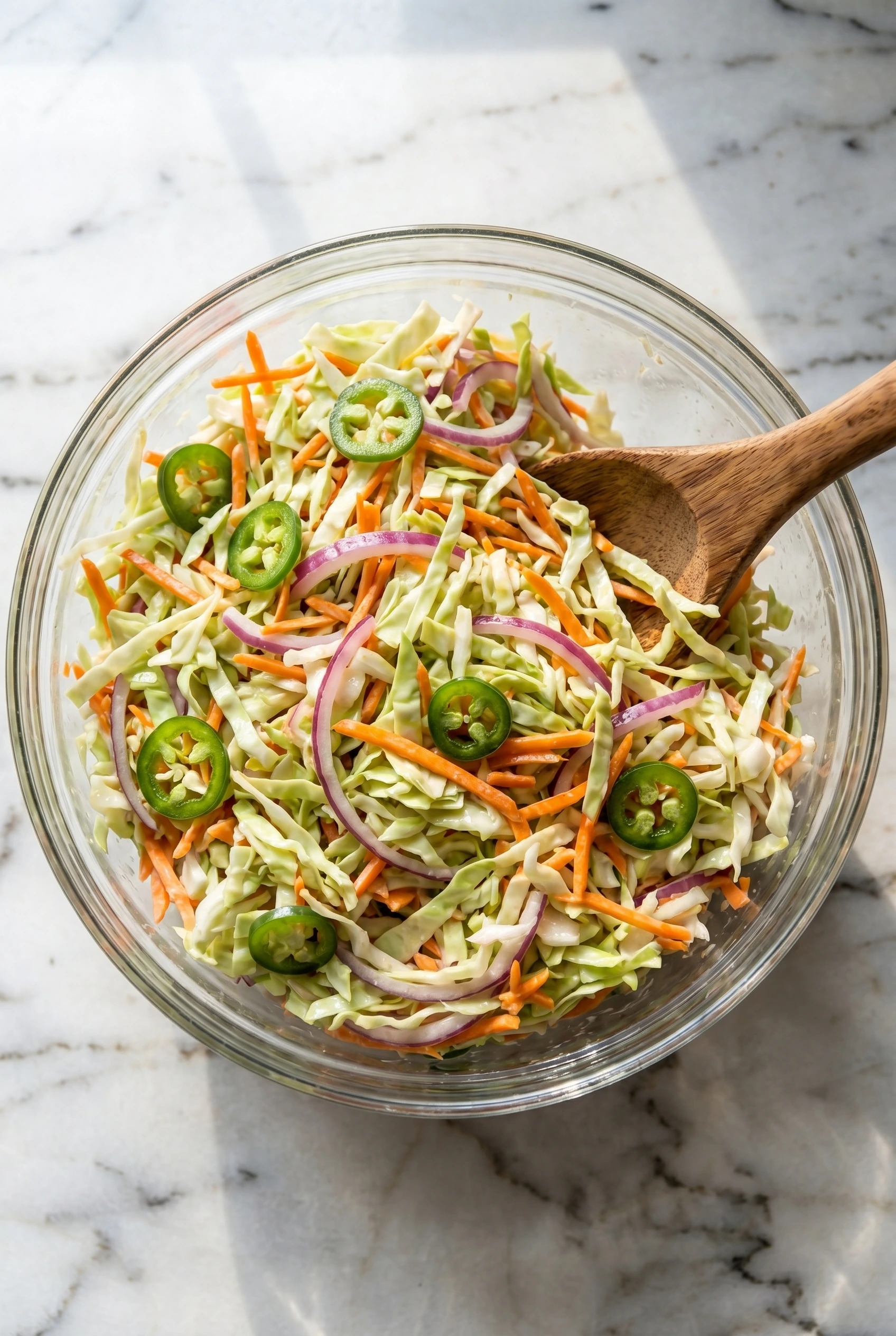
- Mix the slawYou transfer the pressed cabbage to a large bowl. You add the grated carrots, sliced red onion, diced jalapeño, rubbed oregano, salt, and white vinegar. You toss everything together until the vinegar coats every piece of cabbage. You taste a pinch and check the salt level. If the bowl feels sharp and bright, the ratio works. If it tastes flat, you add a heavier pinch of salt and toss again.
- Let it rest: quick version versus curtido recipe fermented on the counterFor the quick refrigerator version, you cover the bowl or transfer everything to a sealed glass jar and place it in the fridge for at least two hours. After two hours the flavor sharpens, the onion mellows, and the cabbage absorbs the vinegar. After overnight, the whole jar tastes significantly more complex.
- For a traditional curtido recipe fermented at room temperature, the process requires leaving the salted and seasoned cabbage out at room temperature for one to three days before refrigerating. The naturally occurring bacteria on the cabbage produce lactic acid, which gives true fermented curtido a deeper sour flavor than the quick version. If you want to explore the fermented method, reputable fermentation guidance from sites like Cultures for Health covers the salt ratios, container choices, and timing involved in safe home fermentation. The quick-fridge curtido recipes in this article deliver a sour, tangy result without any room-temperature fermentation risk.
- Pack and storeYou transfer the finished curtido to a glass jar with a tight lid and store it in the fridge for up to one week. The texture softens slightly each day as the vinegar continues to break down the cell walls of the cabbage, which most people find more pleasant than the crunchy raw version.