
A jar of fermented cabbage purchased on impulse and then ignored for three full weeks produced this kimchi mac and cheese that now appears on the weekly dinner list without any impulse-buy guilt attached.
This kimchi mac and cheese recipe cooks a roux-based cheddar sauce with sautéed onion and garlic, folds in a full cup of finely chopped kimchi, coats al dente elbow macaroni, and bakes the whole dish under a mozzarella and cheddar crust at 380°F for 20 to 25 minutes.
The sharp acidity of the kimchi cuts through the heavy dairy at every bite and prevents the dish from tasting like a flat, rich slab of cheese. My first cheese sauce burned while I answered a text message. The second one worked perfectly.
reader review
“Creamy Creamy and Creamy with the most perfect cheesy golden top I have ever pulled out of my oven. I grated the cheddar myself just like the recipe says and the sauce came out so smooth it was unreal. My teenagers could not stop eating it straight from the baking dish. Thank you Thank you Thank you!!!!!” – Michelle T.
Loved this too? Add your reviewWhy You’ll Love This Recipe
- Budget-friendly by design. One pound of macaroni, two cups of cheddar, and a cup of kimchi from an already-open jar produce six generous servings for under eight dollars.
- Pantry-forward ingredients. Flour, butter, and whole milk form the base of the sauce. The kimchi provides the only ingredient that requires a separate grocery store trip.
- One pot plus one baking dish. The sauce builds in the same pot used for the pasta water, and the oven handles the final stage while you set the table.
- Better the next day. Leftover kimchi mac and cheese refrigerated overnight develops a deeper, more complex flavor as the fermented cabbage continues to season the solidified cheese sauce.
Tools You’ll Need
- Large stockpot. Provides enough water volume to cook one pound of macaroni without the pasta clumping together on the bottom during boiling.
- Whisk. Keeps the flour and milk from forming lumps at the roux stage. A wooden spoon doesn’t produce the same even, smooth result during the liquid-incorporation step.
- 9×13 inch baking dish. A standard 9×13 inch glass or ceramic dish produces the optimal ratio of golden crust surface area to creamy interior. A smaller dish forces the pasta too deep and produces an undercooked center.
Ingredients
- Macaroni: I use standard elbow macaroni in this recipe. Any short, ridged tubular pasta like penne or cavatappi substitutes at the same quantity.
- Cheddar: I always grate cheddar from a block in this recipe. Pre-shredded bags contain anti-caking powder that prevents smooth melting and produces a grainy sauce.
- Kimchi: I use store-bought napa cabbage kimchi in this recipe, finely chopped and lightly squeezed before adding to the sauce. Any variety of kimchi works as long as it gets chopped small.
- Whole milk: I use full-fat whole milk in this recipe. Reduced-fat milk produces a thinner sauce that doesn’t hold its consistency through baking.
- Vegetable stock: I use low-sodium vegetable stock in this recipe for better seasoning control. Chicken stock substitutes if you prefer a richer base.
- Mozzarella: I use block mozzarella, grated fresh, for the topping in this recipe. Pre-shredded mozzarella substitutes but produces a less stretchy, less cohesive crust.
- Gochujang (optional): I use one tablespoon of gochujang whisked into the milk for a spicy variation of this recipe. It adds fermented chili heat that pairs naturally with the kimchi.
Instructions
Boil the pasta, then stand at the stove and whisk the sauce until your arm gets tired.
- Preheat and boil: Preheat the oven to 380 F and bring a large pot of salted water to boil. Cook the macaroni according to package directions until al dente. Drain the pasta and set it aside. If you overcook the pasta slightly, the oven will just make it softer, which is totally fine.
- Cook the aromatics: Place a medium-sized pot over medium heat, and add the olive oil, butter, minced garlic, and diced onion. Sauté until the onion is translucent and fragrant. Do not rush this step, because crunchy raw onions ruin the texture of a smooth cheese sauce.
- Make the base: Sprinkle the flour, salt, and pepper over the melted butter and whisk to form a roux. Cook for 2 to 3 minutes until the roux turns a light golden color. It will look like weird wet sand, but trust the process.
- Build the liquid: Gradually pour in the vegetable stock and milk, whisking the whole time, to incorporate the liquids into the roux. Bring to a simmer and continue whisking constantly until the mixture thickens, becomes creamy, and has no lumps remaining. Pour the milk slowly so you do not end up with a chunky mess.
- Melt the cheese: Stir in 1 cup of the grated cheddar cheese and chopped kimchi until the cheese is fully melted and the sauce is smooth. Take the pot off the heat before adding the cheese so it melts gently instead of splitting into a greasy puddle.
- Combine and top: Combine the cooked macaroni with the cheese sauce, stirring to coat the pasta evenly, then spoon the mixture into a baking dish. Sprinkle the remaining grated cheddar and mozzarella cheeses over the top. If you want to add an extra handful of cheese here, I will not tell anyone.
- Bake the pasta: Place the baking dish into the preheated oven and bake for 20 to 25 minutes, or until the top is golden brown and the cheese is melted and bubbly. Remove from the oven, garnish with chives, and serve warm. Do not burn your mouth on the first bite, even though it smells amazing.
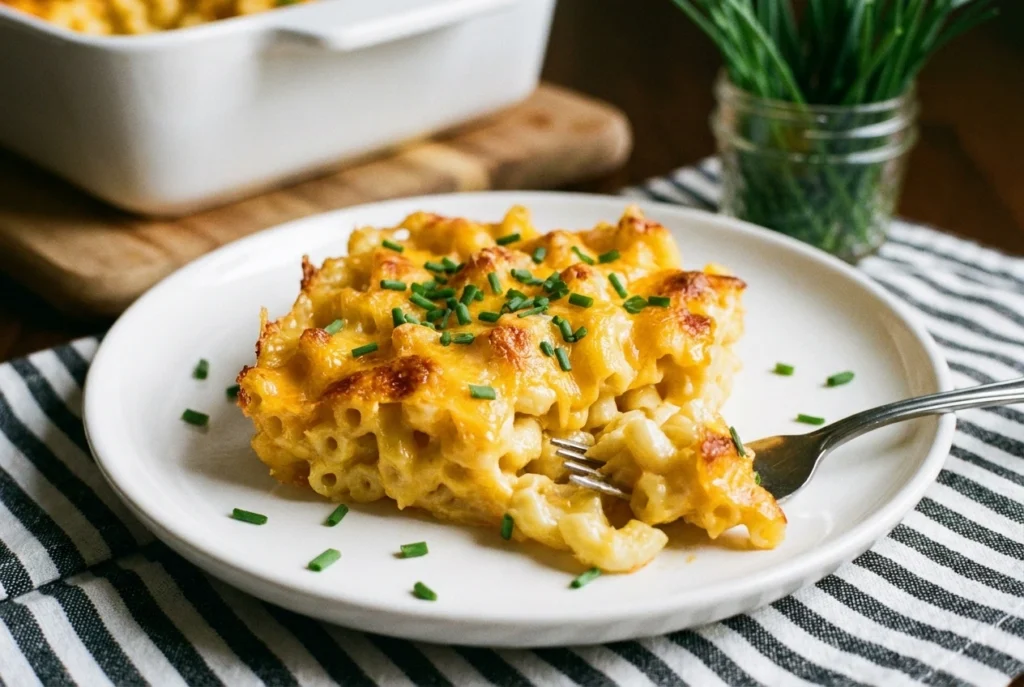
Seasoning and Taste as You Go
Taste the cheese sauce after the kimchi goes in, before the pasta combines, and correct at that stage:
- Too flat: Stir in a tablespoon of the kimchi liquid from the jar. The fermented brine wakes up the dairy flavor without adding more salt.
- Too salty: Whisk in two tablespoons of whole milk and stir over low heat for thirty seconds to dilute the seasoning.
- Needs depth: Cook the onion for an additional two minutes during the aromatic step to build a sweeter, more caramelized base before the flour goes in.
♥ The Misfit Tips!
- Grate the cheddar from a block, every time. Pre-shredded cheddar from a bag contains cellulose powder that coats each strand and prevents the cheese from melting smoothly into the sauce. A box grater and a block of sharp cheddar produce a consistently smooth, creamy result.
- Take the pot fully off the heat before adding cheese. Moving the pot to a cold burner prevents residual heat from continuing to cook the sauce after the burner turns off. Cheese added to sauce above 170°F breaks into a greasy, separated mass that no amount of whisking repairs.
- Assemble the dish the night before if needed. Cover the assembled, un-baked dish with plastic wrap and refrigerate overnight. Bake directly from the refrigerator with ten extra minutes added to the total bake time.
Make It Yours
- Protein additions: Stir cooked and crumbled bacon or shredded rotisserie chicken into the pasta-sauce mixture before transferring to the baking dish.
- Spice level: Whisk one tablespoon of gochujang into the milk mixture during the liquid-addition step for a deeper, fermented chili heat that integrates through the entire sauce.
- Gluten-free: Use certified gluten-free elbow pasta and replace the all-purpose flour with cornstarch at half the quantity, mixed with two tablespoons of cold water before adding to the butter.
Perfect Pairings
This baked pasta works best alongside two things that balance the heavy dairy:
- Crusty garlic bread pressed against the edge of the bowl to absorb the cheese sauce that pools around each serving
- A crisp green salad dressed with a sharp red wine vinaigrette that cuts through the cheddar richness between bites
Troubleshooting Guide
Something went sideways? Been there. Here is how to fix it.
- Problem: The cheese sauce turned grainy and separated
- Why: The heat stayed too high when the cheese went into the sauce, causing the dairy proteins to contract and expel the fat
- Fix: Remove the pot from the heat immediately and whisk in two tablespoons of cold whole milk to drop the temperature and re-emulsify the sauce.
- Problem: The sauce ran too thin after adding the liquids
- Why: The roux cooked for less than two minutes and didn’t develop enough thickening capacity, or the liquid went in too fast
- Fix: Keep the sauce simmering on medium-low heat while whisking constantly until enough water evaporates and the consistency thickens to coat the back of a spoon.
- Problem: The cheese top burned before the center heated through
- Why: The oven runs above the set temperature, or the baking dish sat too close to the top heating element
- Fix: Tent the dish with aluminum foil for the remaining bake time and move the rack to the center position.
How to Store The cheese sauce
❤
- Fridge. Up to 4 days in an airtight container. The sauce thickens significantly as it cools. Add a splash of whole milk before reheating to restore the creamy texture.
- Freezer. Up to 2 months in a sealed freezer-safe container. Thaw overnight in the refrigerator. The cheese sauce may appear slightly grainy after thawing but tastes fully intact.
- Reheat. Cover the dish with foil and bake at 350°F for 15 to 20 minutes. Add a splash of milk to the dish before covering to prevent the sauce from drying out during the second bake.
- Chives. Add fresh chives only to portions eaten immediately. Chives stored overnight inside the hot dish turn dark and lose their fresh bite by the next day.
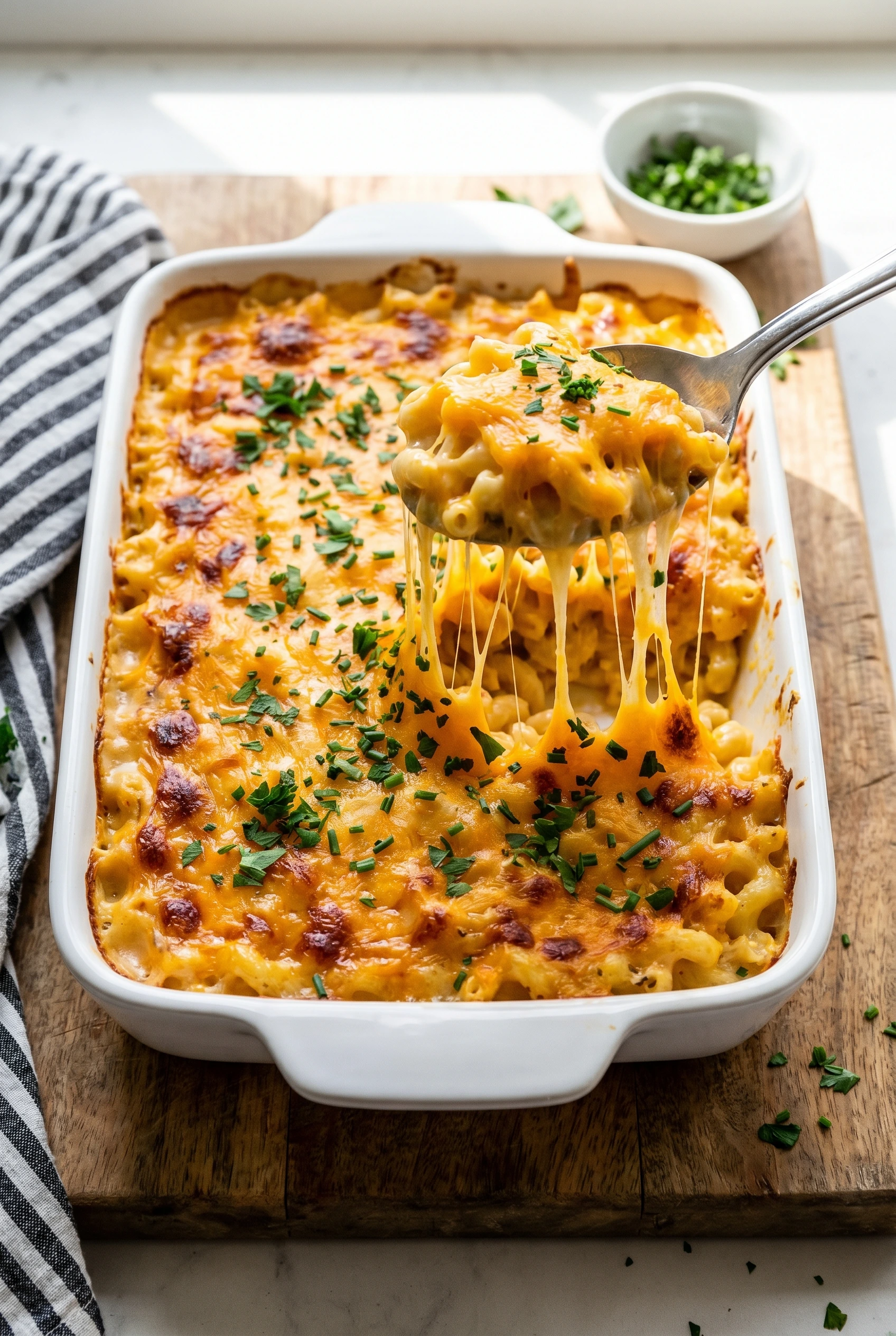
Kimchi Mac and Cheese Recipe
Ingredients
Equipment
Method
- Preheat and boil the pastaSet the oven to 380°F (193°C). Bring a large pot of well-salted water to a full boil. Cook the macaroni according to package directions until al dente. Drain and set aside in the colander. Slightly overcooked pasta continues softening in the oven, which produces an acceptable texture in the finished dish.
- Cook the aromaticsPlace a medium-sized pot over medium heat. Add the olive oil and butter together. Once the butter melts, add the minced garlic and diced onion. Sauté for 4 to 5 minutes, stirring regularly, until the onion turns fully translucent and the garlic smells fragrant. Undercooked onion at this stage produces crunchy pieces that disrupt the smooth texture of the finished sauce.
- Build the rouxSprinkle the flour, salt, and pepper over the softened aromatics. Whisk immediately to coat the onion and garlic in the flour. Cook for 2 to 3 minutes, whisking constantly, until the mixture turns a light golden color and smells faintly nutty. The mixture resembles wet sand at this stage, which is correct.
- Add the liquidsPour the vegetable stock into the roux in a slow, steady stream while whisking continuously. Follow with the whole milk, pouring gradually and whisking throughout to prevent lumps from forming. Bring the mixture to a gentle simmer and whisk until the sauce thickens enough to coat the back of a spoon, about 4 to 5 minutes.
- Melt the cheese and add the kimchiRemove the pot from the heat completely before adding the cheese. Stir in one cup of the grated cheddar until fully melted and the sauce runs smooth. Add the finely chopped kimchi and stir to distribute evenly. Adding cheese to a sauce still sitting over active heat causes the dairy proteins to seize and the fat to separate into a greasy, broken sauce.
- Combine and assembleAdd the drained macaroni to the cheese and kimchi sauce. Stir until every piece of pasta coats evenly. Transfer the mixture to the 9×13 inch baking dish. Scatter the remaining cup of grated cheddar and the full cup of grated mozzarella across the top in an even layer.
- Bake and serveBake at 380°F for 20 to 25 minutes until the cheese top turns golden brown and bubbles at the edges. Remove from the oven and scatter the fresh chives across the surface immediately before serving. Rest for 3 minutes before cutting so the sauce sets slightly and portions hold their shape on the plate.