
A head of green cabbage that spent a full week in the crisper drawer judging me from behind the vegetable drawer demanded a better fate than compost, which is how I ended up making these stuffed cabbage rolls for the first time on a Sunday afternoon with ripped leaves, a messy counter, and a kitchen that looked like a vegetable warzone.
This stuffed cabbage rolls recipe fills blanched green cabbage leaves with a seasoned pork-beef-and-rice mixture, rolls them seam-side down into a casserole dish, and bakes them under a blanket of tomato sauce and condensed tomato soup for 75 to 90 minutes. The sauce covers every imperfect seam. Here is exactly how I do it.
reader review
“Tender Tender and Tender. I made these stuffed cabbage rolls for Sunday dinner and my whole family went completely silent at the table. The tomato soup in the sauce is a genius move, I never would have thought of that. I made a double batch and froze half, and they reheated perfectly. Thank you Thank you Thank you!!!!!” – Patricia W.
Loved this too? Add your reviewWhy You’ll Love This Recipe
- Forgiving to assemble. Torn leaves patch with smaller ones. Misshapen rolls bake identically to neat ones. The tomato sauce covers every imperfection on the plate and on the pan.
- Better the next day. The filling and sauce meld together overnight in the refrigerator, and day-two leftovers taste noticeably more complex than the freshly baked batch.
- Budget dinner for a crowd. Cabbage, white rice, and a pound and a half of ground meat produce a full 9×13 casserole dish that feeds six to eight people for under twelve dollars.
- Freezer-ready at any stage. These rolled stuffed cabbage bundles freeze baked or unbaked for up to three months without any significant texture loss in the filling.
Tools You’ll Need
- Large stockpot. Wide enough to submerge a full head of cabbage and hold it at a rolling boil without the water overflowing. A narrow pot forces the cabbage to one side and produces uneven blanching.
- 9×13 inch casserole dish. Glass or ceramic holds heat evenly and produces consistent baking across the entire batch. Metal pans work but conduct heat more aggressively at the edges.
- Small paring knife. Cuts out the tough central core of the cabbage before boiling, which allows the leaves to peel away from the head cleanly in the water.
Ingredient Notes and Substitutions
❤
- Cabbage: I use a medium-to-large green cabbage in this recipe. Savoy cabbage works and blanches slightly faster due to its looser leaf structure.
- Ground meat: I use a combination of lean ground pork and lean ground beef. Ground turkey substitutes for both with one tablespoon of olive oil added to the filling.
- Rice: I use long-grain white rice, parboiled for exactly 5 minutes before mixing into the filling. Cauliflower rice substitutes for a lower-carb version, skip the parboiling step.
- Dill: I use dried dill in this recipe. Fresh dill substitutes at three times the quantity.
- Tomato sauce: I use plain jarred tomato sauce in this recipe. Homemade marinara works at the same volume.
- Condensed tomato soup: I use one standard can of Campbell’s condensed tomato soup. It adds a subtle sweetness that plain tomato sauce alone doesn’t produce.
- Egg: I use one large egg as the binder in the filling. Don’t skip it or the filling crumbles when sliced.
Instructions
Boil the cabbage, brown the meat, then let the oven do the boring part while you go live your life.
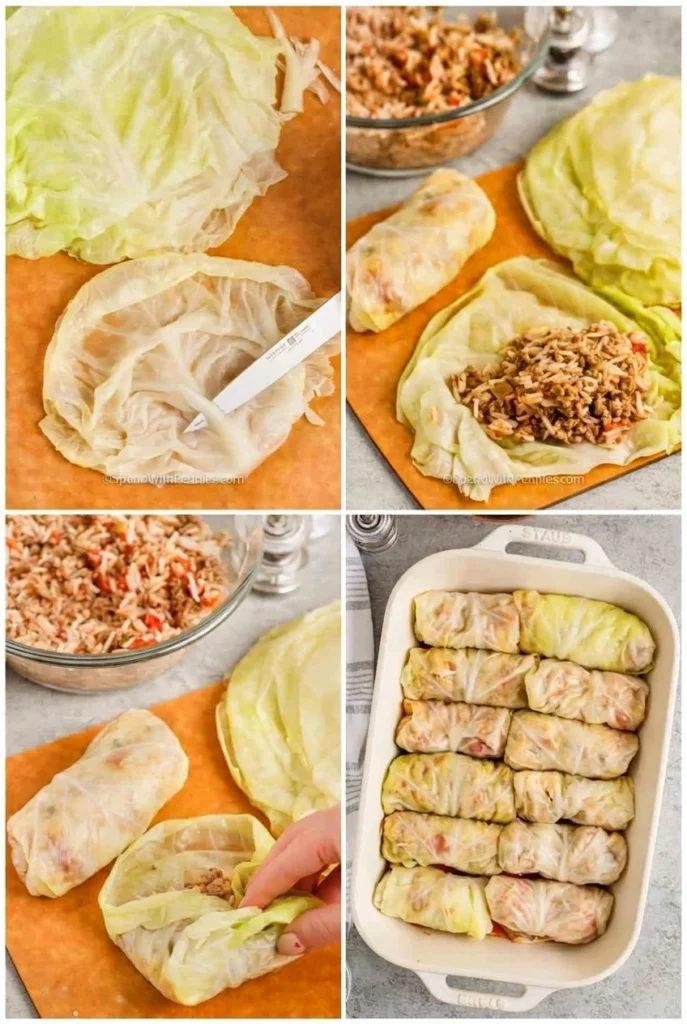
- Boil the cabbage: Submerge the head in boiling water and peel the leaves off as they soften. If you rip a few, do not panic; you can overlap them later and no one will know.
- Preheat the oven: Get the oven to 350°F before your hands are covered in raw meat.
- Cook the rice: Parboil the rice so it is slightly underdone. If you cook it fully now, it turns into wallpaper paste in the oven.
- Brown the meat and aromatics: Cook the beef, pork, onions, garlic, and seasonings until no pink remains, then drain the fat. Seriously, drain it, or your sauce will look like an oil slick.
- Mix the filling: Stir the parboiled rice, diced tomatoes, a splash of tomato sauce, and the egg into the meat mixture until well combined.
- Prep the sauce: Whisk the remaining tomato sauce and tomato soup together, then spread a thin layer in your baking dish to prevent sticking.
- Roll the cabbage: Cut the thick stem off the leaf, add a scoop of filling, fold the sides, and roll. Place them seam-side down so they do not unroll and mock you while baking.
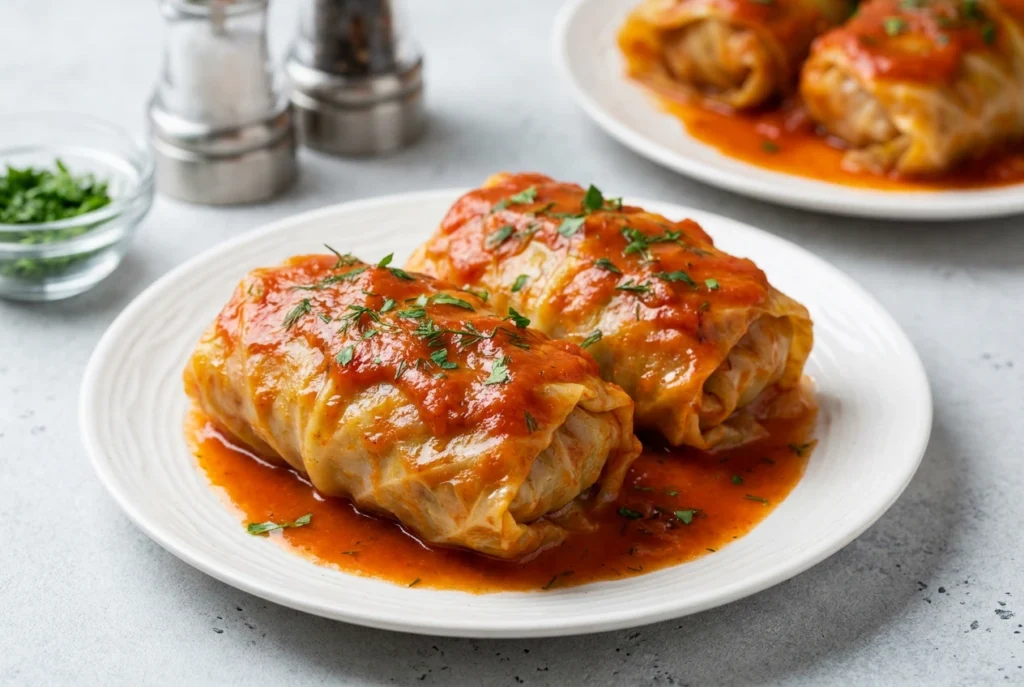
- Bake the rolls: Pour the rest of the sauce over the top, cover tightly with foil, and bake. If you need to know how long to cook stuffed cabbage rolls, give them 75 to 90 minutes, then let them rest so you do not burn your mouth.
Seasoning and Taste as You Go
The tomato sauce mixture adjusts easily before it goes over the raw rolls:
- Too flat: Stir a pinch of salt or a teaspoon of red wine vinegar into the sauce to sharpen the tomato flavor.
- Too salty: Add two tablespoons of water to the sauce and stir before pouring over the rolls.
- Needs depth: Whisk one teaspoon of Worcestershire sauce into the tomato-soup mixture before pouring.
♥ The Misfit Tips!
- Boil the whole head rather than peeling raw. Raw cabbage leaves tear the moment any pressure applies. A head submerged in boiling water with the core cut out releases leaves cleanly as each one softens. This produces usable leaves rather than a pile of shreds.
- Patch torn leaves rather than discarding them. A smaller inner leaf placed underneath a torn outer leaf reinforces the seam and holds the filling in place during baking. The sauce covers the patch completely on the finished plate.
- Freeze extra filling as meatballs. Leftover cabbage roll stuffing rolled into small balls and baked at 400°F for 20 minutes produces a separate freezer batch that reheats in the tomato sauce later.
Make It Yours
- Ground turkey: Substitutes for the pork-beef combination at the same total quantity. Add one tablespoon of olive oil to the filling to compensate for the reduced fat content.
- Vegetarian filling: Replace the meat with two cups of chopped cremini mushrooms and one cup of cooked green lentils. Season aggressively with salt, pepper, and dill before rolling.
- Lower carb: Replace the white rice with cauliflower rice and skip the parboiling step entirely. Don’t freeze this version as cauliflower rice turns to mush after thawing.
Perfect Pairings
These stuffed cabbage rolls work best alongside:
- Crusty bread or mashed potatoes pressed against the plate to absorb the savory tomato gravy that pools around each roll
- A sharp, acidic green salad with a red wine vinaigrette that cuts through the richness of the pork-beef filling
Troubleshooting Guide
Something went sideways? Been there. Here is how to fix it.
- Problem: my cabbage leaves are too stiff to roll
Why it happened: They did not boil long enough to break down the tough fibers.
Fix it: Toss them back in the boiling water for another minute until they are pliable.
- Problem: my rolls fell apart in the pan
Why it happened: You likely placed them seam-side up or overfilled them.
Fix it: It is fixable, I promise. Just scoop them up with a spatula and call it an unrolled cabbage casserole.
- Problem: the rice inside is crunchy
Why it happened: You either skipped parboiling or the rolls did not have enough liquid while baking.
Fix it: Add a half cup of water or broth to the pan, cover tightly with foil, and bake for another 20 minutes.
How to Store cabbage rolls
❤
- Fridge. Up to 4 days in an airtight container. The filling and sauce meld overnight and the flavor on day two improves noticeably over the fresh-baked version.
- Freezer. Up to 3 months, baked or unbaked, stored in a sealed freezer-safe container. Thaw overnight in the refrigerator before baking or reheating. The cabbage softens slightly after freezing but holds its shape.
- Reheat. Warm in a covered skillet over medium-low heat with a splash of water or sauce for 8 minutes. Microwaving works but dries the outer cabbage layer.
- Cauliflower rice version. Don’t freeze this adaptation. Cauliflower rice releases water during thawing and turns the filling mushy.
Easy Cabbage Rolls
Ingredients
Equipment
Method
- Boil the cabbage. Cut the core out of the bottom of the cabbage with a paring knife, cutting about two inches deep. Submerge the whole head in a large pot of boiling water. As the outer leaves soften and loosen, peel them away with tongs and transfer them to a plate. Work through the head leaf by leaf until you have at least twelve large, intact leaves. Any torn leaves patch with smaller inner leaves folded underneath.
- Preheat the oven. Set the oven to 350°F (177°C) before handling any raw meat.
- Parboil the rice. Cook the rice in boiling salted water for 5 minutes only. Drain and set aside. Slightly underdone rice absorbs the tomato sauce and steams to a fully tender texture inside the sealed rolls during baking. Fully cooked rice produces a pasty, dense filling.
- Brown the meat and aromatics. Cook the ground pork, ground beef, minced onions, minced garlic, dill, and parsley in a large skillet over medium-high heat until no pink remains, about 8 minutes. Drain the rendered fat from the pan before proceeding. Undrained fat turns the sauce into an oil slick during baking.
- Mix the cabbage roll stuffing. Combine the browned meat mixture, parboiled rice, drained diced tomatoes, a splash of the tomato sauce, and the egg in a large bowl. Stir until evenly combined.
- Prep the sauce and casserole dish. Whisk the remaining tomato sauce and condensed tomato soup together in a bowl. Spread a thin layer across the bottom of the 9×13 casserole dish to prevent the rolls from sticking.
- Roll the cabbage. Cut the thick rib from the base of each leaf with a knife to make folding easier. Place two to three tablespoons of filling near the base of the leaf, fold the sides inward, and roll away from you into a compact cylinder. Place each roll seam-side down in the casserole dish. Seam-side down rolls stay closed during baking. Seam-side up rolls open and spread filling into the sauce.
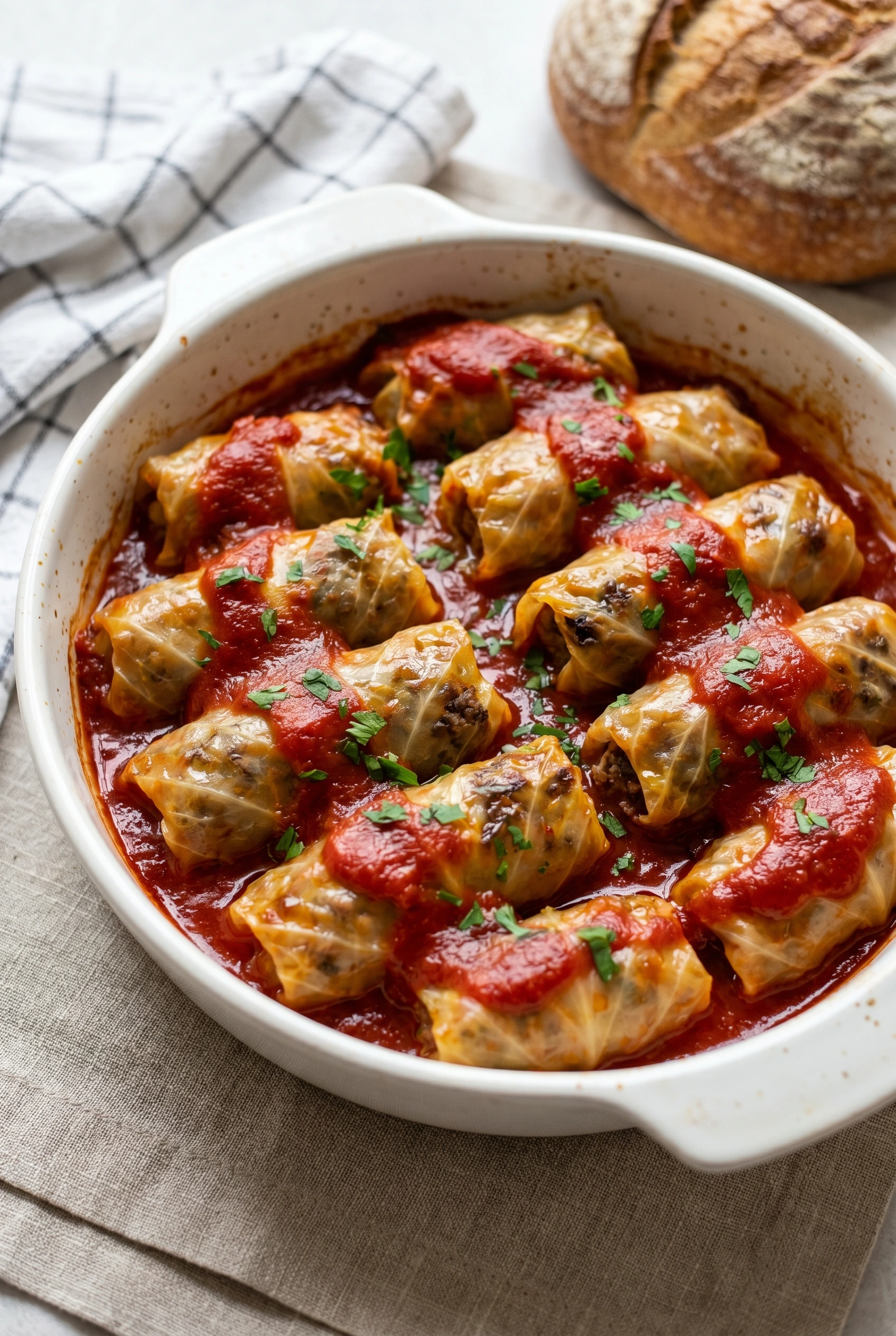
- Bake covered. Pour the remaining tomato sauce mixture over the tops of all the rolls. Cover the dish tightly with aluminum foil. Bake at 350°F for 75 to 90 minutes. The answer to how long to cook stuffed cabbage rolls depends on roll size: smaller rolls finish at 75 minutes, larger rolls with more filling need the full 90. Let the dish rest uncovered for 10 minutes before serving.