
A head of cabbage purchased with full intentions of making traditional Polish stuffed cabbage rolls, a kitchen that looked like a vegetable crime scene after the third torn leaf, and twenty minutes of sweating over a pot of boiling water produced this golumpki soup instead. The pivot was the right call.
This golumpki soup recipe delivers the exact sweet, savory, and tangy flavor profile of classic gołąbki in a single pot without any rolling, blanching, or reassembly required. Brown the beef, chop the cabbage, pour in the liquids, and let the stove handle the next 25 minutes.
According to The Spruce Eats, traditional golumpki relies on the same sweet-sour tomato balance that defines this soup, making the deconstructed version a fully faithful interpretation of the original.
reader review
“Hearty Hearty and Hearty. I made this golumpki soup on a rainy Tuesday and my whole family asked for seconds. The brown sugar in the tomato broth is everything, I never would have added it on my own. This is going into the permanent dinner rotation.” – Donna R.
Loved this too? Add your reviewWhy You’ll Love This Recipe
- Minimal prep, maximum output. The entire vegetable prep for this golumpki soup takes under ten minutes. Chop the cabbage and carrots, dice the onion, and the cutting board goes straight to the sink.
- One pot, one cleanup. The beef browns, the aromatics soften, and the entire soup finishes in the same heavy-bottomed pot. No secondary pans, no sheet trays.
- Budget dinner that feeds a crowd. One pound of 90% lean ground beef and half a head of green cabbage produce six to eight full bowls of soup for under ten dollars total.
- Better the next day. The rice absorbs more broth overnight and the tomato-brown sugar balance deepens in the refrigerator, making leftover golumpki soup a lunch worth eating.
Tools You’ll Need
- Large heavy-bottomed soup pot, 6-quart minimum. A thin-bottomed pot scorches the ground beef before it browns evenly and produces a bitter base note that carries through the entire finished soup.
- Sturdy wooden spatula or flat-edged wooden spoon. Breaks the ground beef into small, uniform pieces during browning. Large chunks of beef boil in the broth rather than browning and produce a different, flatter flavor.
- Chef’s knife with a sharp blade. The cabbage prep requires firm, controlled cuts across a dense vegetable. A dull knife slides off the cabbage and requires significantly more force, which produces uneven pieces.
Ingredient Notes and Substitutions
❤
- Ground beef: I use 90% lean ground beef in this recipe to keep the broth clean and grease-free. 80/20 works but requires draining the fat completely before adding any liquids.
- Cabbage: I use standard green cabbage, chopped into bite-sized squares with a chef’s knife. Savoy cabbage substitutes and softens slightly faster during simmering.
- Rice: I use uncooked long-grain white rice added directly to the broth. Brown rice substitutes but requires 45 minutes of total simmer time and an extra cup of broth.
- Tomato sauce: I use three standard 8-ounce cans of plain tomato sauce. Crushed tomatoes substitute at the same volume for a slightly chunkier broth.
- Beef broth: I use reduced-sodium beef broth in this recipe for better seasoning control. Regular beef broth works but makes additional salting less precise.
- Brown sugar: I use light brown sugar in this recipe. Dark brown sugar substitutes and adds a slightly deeper molasses note to the broth.
- Bay leaf: I use one dried bay leaf and remove it before serving. Don’t skip it; it adds a background herbal depth that no other single ingredient replicates.
Instructions
Brown the meat, chop the vegetables, and let the stove do the heavy lifting while you go sit down.
- Brown the beef: Heat the olive oil in a large pot over medium high heat. Add the ground beef and season with salt and pepper. Break the meat apart thoroughly with a spatula. If you leave giant chunks of beef, they will boil in the broth later and taste like sad meatballs.
- Sauté the aromatics: Cook until the beef is browned, which takes about 4 to 5 minutes. Add the onion and garlic, and cook for another 2 to 3 minutes. Do not walk away during this step, because burnt garlic will ruin the entire pot and force you to order takeout.
- Combine everything: Add the cabbage, carrots, beef broth, tomato sauce, rice, bay leaf, and brown sugar to the pot. Season with another pinch of salt and pepper. Stir it well so the rice does not clump together at the bottom of the pot.
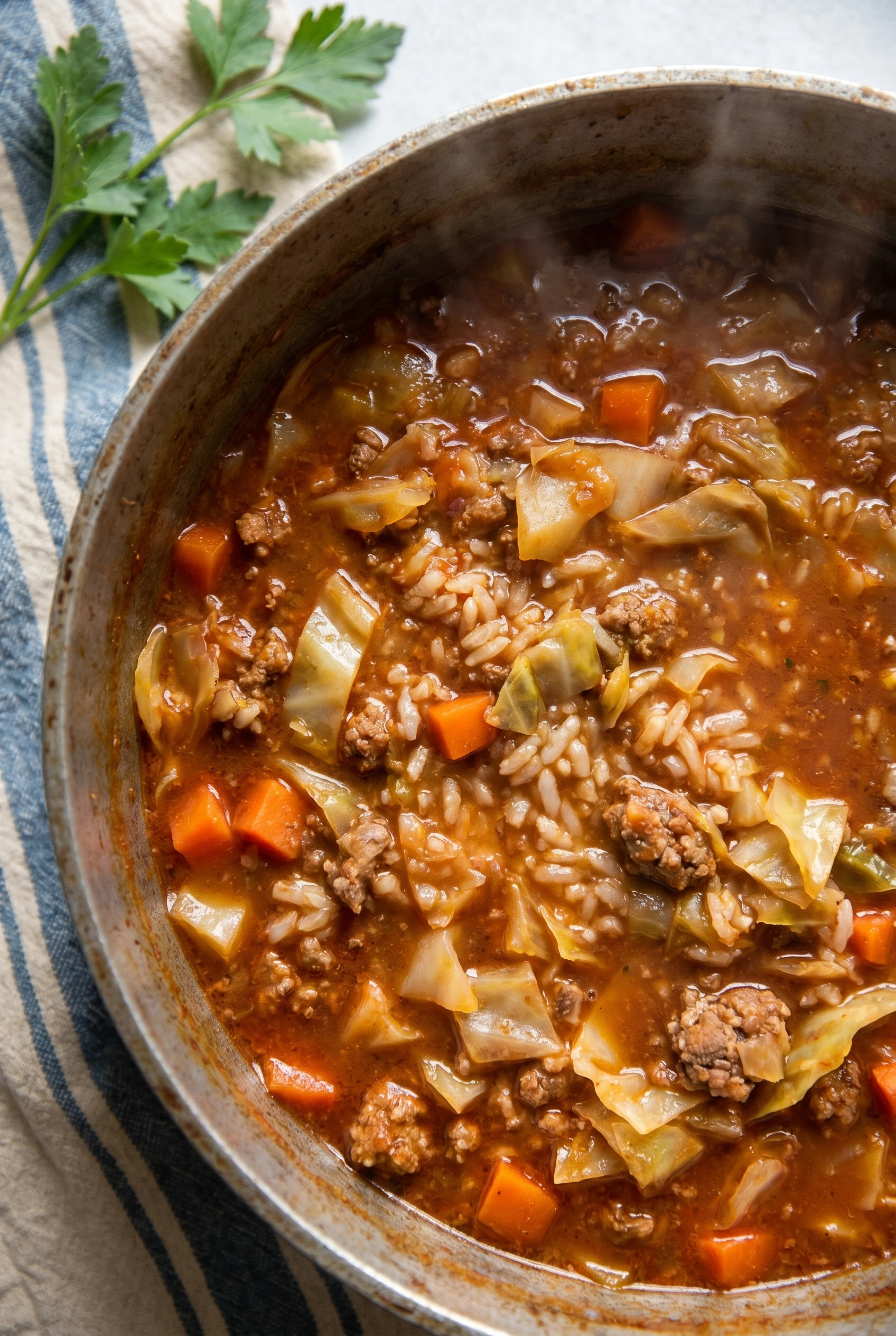
- Simmer the soup: Bring the mixture to a simmer, then lower the heat. Cook for 25 minutes or until the rice is tender. Check the rice at the 20-minute mark. If you overcook it, the rice absorbs all the broth and turns the soup into a dense casserole. Remove the bay leaf and throw it away.
- Garnish and serve: Sprinkle the soup with fresh parsley right before ladling it into bowls. The green herbs distract everyone from the fact that you threw this together in under an hour.
Seasoning and Taste as You Go
The sweet-sour balance in this golumpki soup recipe adjusts entirely to personal preference. Taste the broth at the 20-minute mark and correct before the rice finishes cooking:
- Too flat: Add a heavy pinch of salt or a teaspoon of apple cider vinegar to sharpen the tomato flavor.
- Too sweet: Stir in a few drops of hot sauce or an extra crack of black pepper to cut the brown sugar.
- Needs depth: Stir in a teaspoon of Worcestershire sauce and let the soup simmer for two additional minutes.
♥ The Misfit Tips!
- Set a timer at 20 minutes and check the rice. Forty minutes of simmering while answering emails produces a pot of rice mush with no visible broth remaining. The rice continues absorbing liquid even after the burner turns off, so remove the pot from heat the moment the grains reach tender.
- Drain fat if using 80/20 beef. Skipping the drain step after browning 80/20 ground beef produces a visible oil layer across the top of the finished soup that doesn’t incorporate regardless of stirring.
- Cut the cabbage into bite-sized squares, not long shreds. Long shreds of cabbage hang off the spoon in an unwieldy way during eating and don’t distribute evenly through the broth.
Make It Yours
- Ground turkey: Substitutes for ground beef at the same quantity with one extra tablespoon of olive oil added during browning to compensate for the lower fat content.
- Brown rice: Substitutes for white rice but requires 45 minutes of total simmer time rather than 25. Add an extra cup of beef broth to prevent the extended simmer from reducing the broth too aggressively.
- Low carb: Skip the rice entirely and add one extra cup of chopped cabbage or stir in cauliflower rice during the final three minutes of cooking.
Perfect Pairings
This soup works best alongside two things that complement the sweet tomato broth:
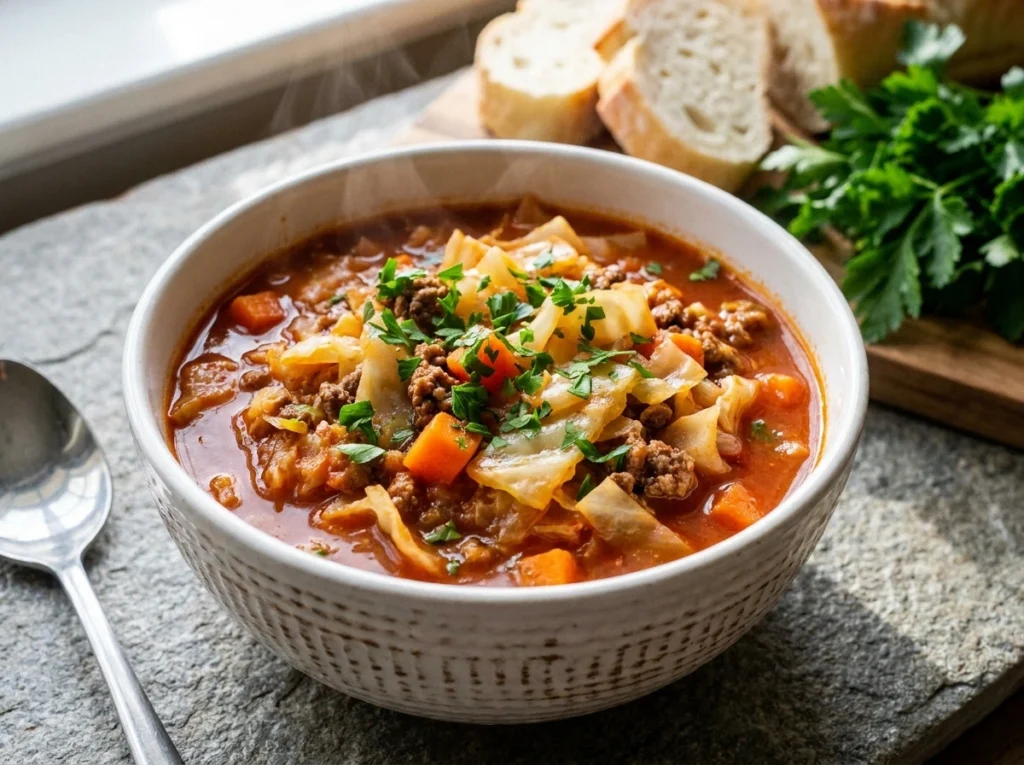
- Thick slices of toasted sourdough bread pressed against the bowl to absorb the broth as the soup level drops
- A sharp, acidic green salad dressed with red wine vinaigrette that cuts through the richness of the browned ground beef
Troubleshooting Guide
Something went sideways? Been there. Here is how to fix it.
- Problem: The rice turned mushy and the soup thickened into a stew
- Why: The simmer ran past 30 minutes, or the pot stayed on a hot burner after the heat turned off
- Fix: Stir in one cup of hot beef broth to loosen the texture. The flavor holds; only the consistency changes.
- Problem: The soup tastes bland despite correct seasoning quantities
- Why: The beef didn’t get seasoned before browning, or the tomato sauce brand runs low in salt
- Fix: Add salt in small increments, a crack of black pepper, and a teaspoon of apple cider vinegar. Taste after each addition.
- Problem: The soup cooled into a very thick, almost solid mass
- Why: The rice absorbed the remaining broth as the soup cooled to room temperature
- Fix: Add a splash of water or beef broth during reheating over medium heat and stir until the desired consistency returns.
How to Store Golumpki soup
❤
- Fridge. Up to 4 days in an airtight container. The rice swells further overnight and the soup thickens each day. Add a splash of broth when reheating.
- Freezer. Up to 3 months in a sealed freezer-safe container. Thaw overnight in the refrigerator. The rice turns slightly grainy after freezing but the broth flavor remains fully intact.
- Reheat. Warm gently over medium heat on the stovetop with a splash of water or broth stirred in. Microwaving works for single servings at 2-minute intervals with a stir between each.
- Parsley. Add fresh parsley only to bowls served immediately. It turns dark and slimy after one night in the refrigerator inside the soup container.
Cabbage Roll Soup
Ingredients
Equipment
Method
- Brown the beefHeat the olive oil in a large heavy-bottomed pot over medium-high heat. Add the ground beef, season with salt and black pepper, and break it apart into small, uniform pieces with a spatula. Cook for 4 to 5 minutes until no pink remains and the meat develops a light brown crust. Large chunks of beef left intact at this stage boil rather than brown once the liquids go in and produce a noticeably different, flatter flavor.
- Sauté the aromaticsAdd the diced onion and minced garlic to the browned beef. Cook for 2 to 3 minutes, stirring frequently, until the onion softens and turns translucent. Burnt garlic at this stage carries a bitter flavor through every component of the finished soup without any remedy.
- Combine everythingAdd the chopped cabbage, sliced carrots, beef broth, tomato sauce, uncooked rice, bay leaf, and brown sugar to the pot. Season with another pinch of salt and black pepper. Stir the full mixture so the rice distributes evenly across the bottom rather than clumping in one area.
- Simmer for 25 minutesBring the pot to a full simmer over medium heat, then reduce to medium-low. Cook for 25 minutes, checking the rice at the 20-minute mark. Rice that simmers past 30 minutes absorbs enough broth to turn the soup into a dense, stew-like mass. Remove and discard the bay leaf before serving.
- Garnish and serveScatter fresh chopped parsley over each bowl immediately before ladling. Add the parsley only to servings eaten right away, never to the storage container, as it turns dark and unpleasant overnight.