
Three heads of cabbage judged me from the crisper drawer for two weeks while my sauerkraut plans quietly died. This fried cabbage recipe rescued the lot and saved dinner in one move.
I grabbed them on sale, convinced I would ferment something impressive, then watched them sit and silently shame my life choices. I needed to cook a mountain of roughage fast, so I chopped it, threw it in a pan with crispy bacon, and ate half the skillet standing over the stove.
The bacon fat carries the flavor, the mustard cuts the richness, and the cabbage caramelizes into something better than its reputation. Here is exactly how I do it.
reader review
Absolutely the best fried cabbage I have ever made. Crispy Crispy and Crispy. I let it sit and sear like the recipe said instead of stirring it to death and it caramelized perfectly. My husband ate half the pan straight off the stove and asked me to make it again the next night – Tammy L.
Loved this too? Add your reviewWhy you’ll love this recipe
- Cheap. Cabbage costs pennies and a single head feeds four people as a generous side, or two people as a full meal.
- One pan. You cook the bacon and the vegetables in the same skillet, which means you wash one pan and call it done.
- Fast. Dinner reaches the table in under thirty minutes, even if you start from a cold stove.
- Forgiving. You can walk away, let the edges get a little dark, and the caramelized bits taste better than the pale version.
Tools You’ll Need
Nothing fancy, I promise.
- Large skillet. You need enough surface area so the vegetables brown instead of steaming into a soggy pile. A twelve-inch cast iron or stainless pan gives you the best sear.
- Tongs. Pushing a large pile of cabbage around with a wooden spoon sends half of it onto the floor. Tongs give you control.
- Slotted spoon. You use this to fish out the crispy bacon bits and keep them on a paper towel while the rest of the dish finishes.
Ingredients
❤
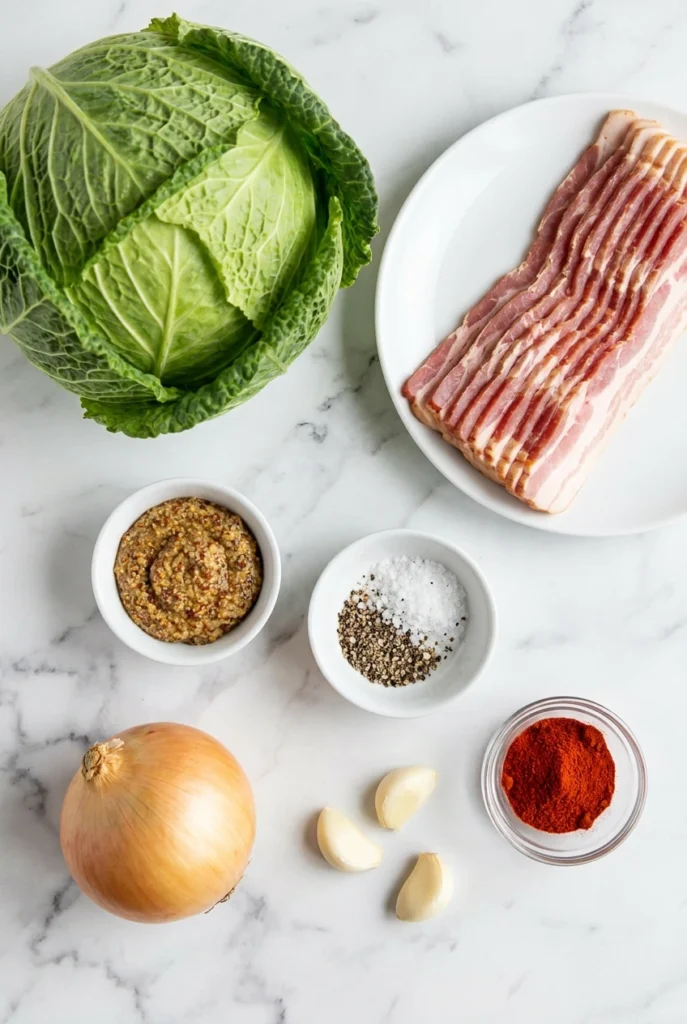
- 6 pieces bacon – This provides the fat we cook everything else in.
- 1 small onion – Diced up to build a savory base.
- 3 garlic cloves – Minced fine so it melts into the background.
- 2 tablespoons stone ground mustard – The vinegar in the mustard cuts the heavy fat. You can use Dijon if you lack stone ground.
- 1/4 teaspoon smoked paprika – Adds a campfire edge without actual heat.
- 1 head cabbage – Sliced and chopped. Green holds up best to high heat.
- kosher salt and freshly ground black pepper – Taste your bacon before salting, as pork varies wildly in saltiness
Instructions
Brown the meat, then let the stove do the heavy lifting while you figure out the rest of dinner.
- Crisp the pork: Heat a large pan on medium heat and add the sliced bacon. Cook until crispy, then removed to a paper towel-lined plate. Remove some bacon grease, leaving about 2 tablespoons in the pan. Do not dump the extra grease down your sink unless you enjoy paying plumbers.
- Soften the onions: Add the onion and saute for 2 to 3 minutes, or until it’s translucent. If the edges get a little dark, that just means more flavor.
- Bloom the spices: Add the garlic, mustard, smoked paprika, salt and pepper and give it a stir to combine. Stir fast here so the garlic does not burn and turn bitter.
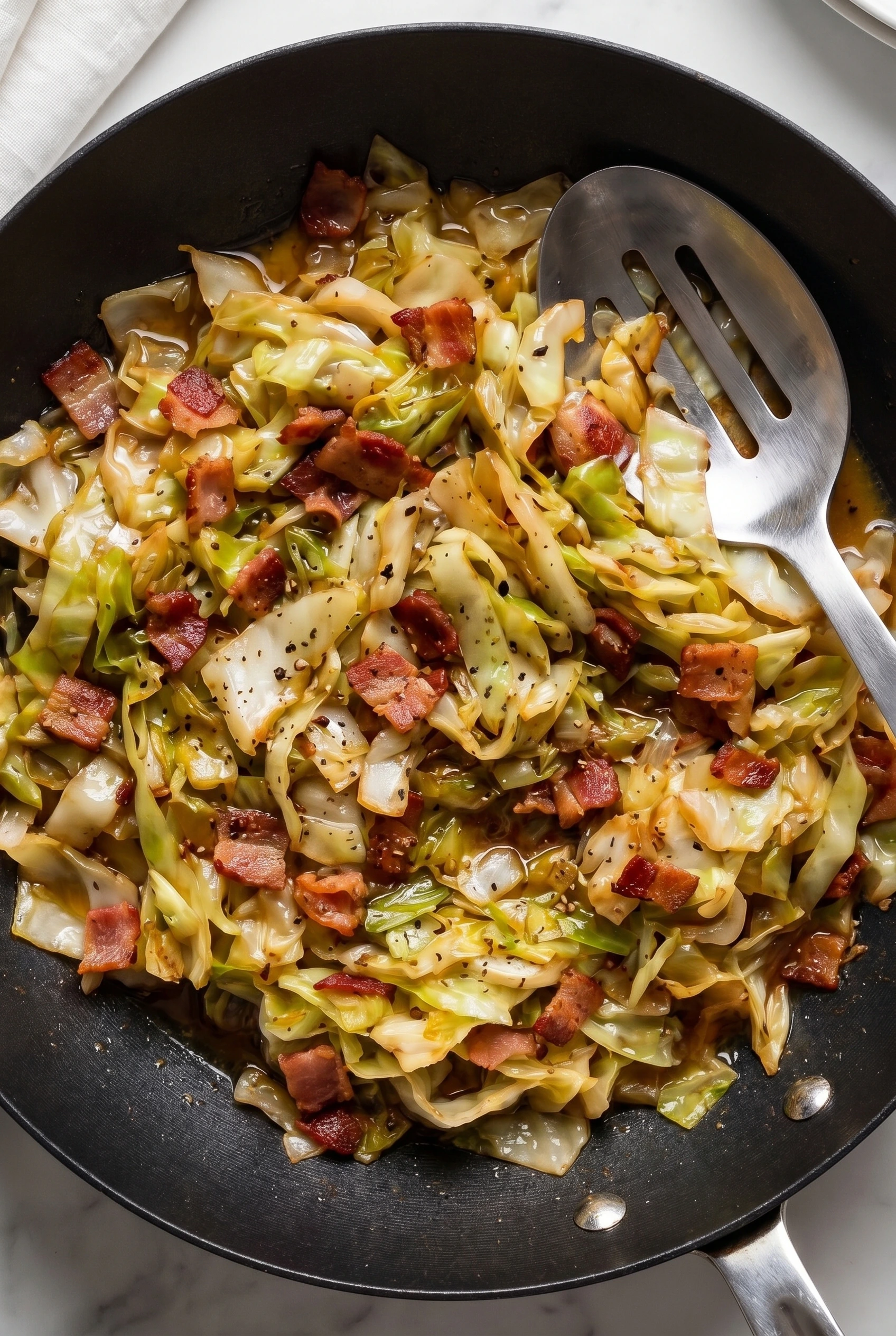
- Wilt the greens: Place the sliced cabbage on top and use a large spoon or tongs to stir and saute together for another 12 to 15 minutes. When the cabbage is done it should be buttery soft and slightly caramelized. It looks like too much for the pan at first, but it cooks down to practically nothing in five minutes.
- Finish the dish: Toss the bacon back in, and stir it all together before serving. Try to resist eating all the crispy bits before they make it to the table.
Seasoning and Taste as You Go
You taste before you plate and fix whatever feels off.
- Too flat. You add a splash of apple cider vinegar, stir it through, and taste again. Acid wakes up every earthy flavor in the pan.
- Too salty. You toss in a small diced potato and cook it until soft so it absorbs the excess sodium from the bacon and pan drippings.
- Needs more depth. You let the cabbage sit completely still over medium heat for three minutes without touching it. The bottom layer builds a dark crust that, when tossed through the rest, deepens the flavor of the entire pan.
♥ The Misfit Tips!
- Do not stir constantly. I treated my first batch like a proper cabbage stir fry and agitated the pan nonstop for fifteen minutes. The cabbage steamed instead of browning and tasted flat and wet. You let it sit and sear between tosses.
- Slice it thick. Shredding the cabbage too thin turns the whole pan into soup within three minutes. Half-inch cuts give you pieces that hold texture through the full cook time.
- Save the core. I used to throw the dense core straight into the compost, but dicing it into small cubes and adding it with the rest of the cabbage gives you a satisfying crunch that contrasts the soft outer leaves.
Make It Yours
You turn this side into a main course with barely any effort.
- Add sausage. Throw in sliced kielbasa for a hearty fried cabbage and sausage dinner.
- Skip the pork. Making fried cabbage without bacon works fine when you swap the pork fat for butter and add a dash of liquid smoke.
- Go Asian. Swap the mustard for soy sauce and sesame oil to build a quick chicken and cabbage stir fry or a savory beef and cabbage stir fry.
Perfect Pairings
You serve this next to something that stands up to a heavy hit of savory flavor.
- A pile of mashed potatoes soaks up the mustardy bacon grease at the bottom of the pan.
- Roasted carrots add color to an otherwise green-and-brown plate.
- A cold lager cuts straight through the rich, salty pork fat.
- A six-o’clock fridge stare with zero plan finds its answer in this skillet.
How to Store fried cabbage
❤
- Fridge. You store leftovers in an airtight container for up to four days. The texture softens, but the mustard flavor deepens overnight in a way that makes cold leftovers genuinely worth eating.
- Freezer. You skip the freezer. The high water content in cabbage turns the whole dish into a grainy, limp puddle when thawed.
- Reheat. You toss the leftovers into a hot dry skillet for three minutes until the edges crisp back up. A microwave produces a warm, soggy version that never fully recovers.
- Note. The crispy bacon bits lose all their crunch within a few hours in the fridge, so you eat those straight from the pan while you still can.
Easy Fried Cabbage
Ingredients
Equipment
Method
- Crisp the baconYou lay the bacon slices in a cold large skillet and turn the heat to medium. Starting in a cold pan renders the fat slowly and produces more even crispiness than dropping bacon into a screaming hot pan. You cook the slices until they turn deep golden brown and crisp throughout, then transfer them to a paper towel-lined plate. You pour off the excess grease, leaving about two tablespoons of rendered fat in the pan. You never pour hot bacon fat down the drain unless you enjoy calling a plumber.
- Soften the onionYou add the diced onion to the bacon fat and sauté over medium heat for two to three minutes until the pieces turn translucent and the edges pick up a little color. Slight browning on the onion edges adds sweetness and depth. You do not rush this step because a properly softened onion builds the flavor foundation for everything that follows.
- Bloom the spicesYou add the minced garlic, stone ground mustard, smoked paprika, and a few cracks of black pepper to the pan. You stir everything together for about thirty seconds, moving it constantly so the garlic does not sit against the hot metal long enough to burn. Burned garlic turns bitter and cannot be fixed without starting over, so you keep the spatula moving and pull the pan off the heat for a few seconds if the temperature runs too high.
- Wilt and caramelize the cabbageYou drop the sliced cabbage directly into the pan on top of the aromatics and use tongs to toss and coat every piece in the spiced bacon fat. The pile looks enormous at first and completely fills the pan, but the volume drops by half in about five minutes as moisture cooks out. You let the cabbage sit undisturbed for two to three minutes before tossing again, which gives the bottom layer time to develop a caramelized crust that tastes far better than constantly stirred fried cabbage. You repeat that cycle of rest and toss for twelve to fifteen minutes total until the cabbage turns buttery soft with golden-brown edges.For a useful overview of caramelization and how sugars in vegetables behave under direct heat, food science resources at Serious Eats explain why patience at medium heat produces deeper flavor than rushing on high.
- Finish and serveYou add the reserved crispy bacon back into the pan and toss everything together so the pork distributes evenly through the cabbage. You taste a forkful and adjust salt, acidity, or pepper. You plate immediately, because the bacon loses its crunch within a few minutes of sitting in the warm, moist cabbage.