- 6 pieces bacon (cut into 1-inch pieces)
- 1 small onion (diced)
- 3 g arlic cloves (minced)
- 2 tablespoons stone ground mustard (or Dijon mustard)
- 1/4 teaspoon smoked paprika
- 1 head cabbage (sliced and chopped)
- kosher salt and freshly ground black pepper (to taste)
Large skillet
Tongs
Slotted spoon
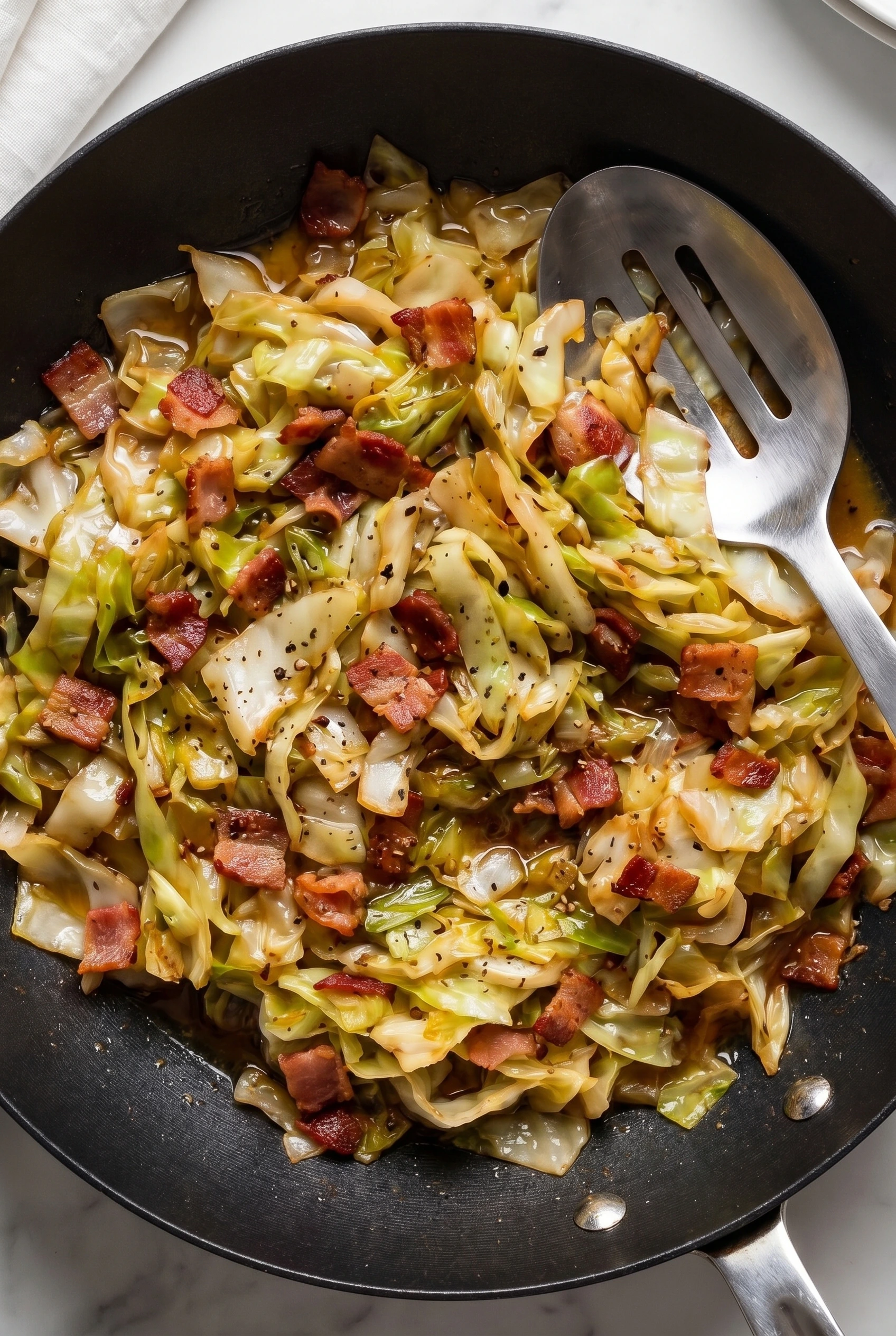
Crisp the baconYou lay the bacon slices in a cold large skillet and turn the heat to medium. Starting in a cold pan renders the fat slowly and produces more even crispiness than dropping bacon into a screaming hot pan. You cook the slices until they turn deep golden brown and crisp throughout, then transfer them to a paper towel-lined plate. You pour off the excess grease, leaving about two tablespoons of rendered fat in the pan. You never pour hot bacon fat down the drain unless you enjoy calling a plumber. Soften the onionYou add the diced onion to the bacon fat and sauté over medium heat for two to three minutes until the pieces turn translucent and the edges pick up a little color. Slight browning on the onion edges adds sweetness and depth. You do not rush this step because a properly softened onion builds the flavor foundation for everything that follows. Bloom the spicesYou add the minced garlic, stone ground mustard, smoked paprika, and a few cracks of black pepper to the pan. You stir everything together for about thirty seconds, moving it constantly so the garlic does not sit against the hot metal long enough to burn. Burned garlic turns bitter and cannot be fixed without starting over, so you keep the spatula moving and pull the pan off the heat for a few seconds if the temperature runs too high. Wilt and caramelize the cabbageYou drop the sliced cabbage directly into the pan on top of the aromatics and use tongs to toss and coat every piece in the spiced bacon fat. The pile looks enormous at first and completely fills the pan, but the volume drops by half in about five minutes as moisture cooks out. You let the cabbage sit undisturbed for two to three minutes before tossing again, which gives the bottom layer time to develop a caramelized crust that tastes far better than constantly stirred fried cabbage. You repeat that cycle of rest and toss for twelve to fifteen minutes total until the cabbage turns buttery soft with golden-brown edges.For a useful overview of caramelization and how sugars in vegetables behave under direct heat, food science resources at Serious Eats explain why patience at medium heat produces deeper flavor than rushing on high. Finish and serveYou add the reserved crispy bacon back into the pan and toss everything together so the pork distributes evenly through the cabbage. You taste a forkful and adjust salt, acidity, or pepper. You plate immediately, because the bacon loses its crunch within a few minutes of sitting in the warm, moist cabbage.