
A bag of aspirational greens sat in my crisper for five days while I weighed takeout against my guilt. I finally stared it down and committed to a foolproof bok choy recipe before it wilted into a tragic science experiment.
We all buy ambitious produce hoping it turns us into healthier people overnight. I worked out how to cook bok choy after a few sad attempts that tasted like hot, salty water.
The method I landed on runs fast, aggressively garlicky, and redeems every vegetable failure in my past. The garlic builds the backbone, the soy sauce carries the salt, and a quick steam finishes the stalks. Here is exactly how I do it.
reader review
“Garlicky Garlicky and Garlicky. I made this bok choy recipe on a Tuesday with no plan and it was on the table in under ten minutes. The sesame oil drizzle at the end made it taste like restaurant food and my whole family asked me to make it again the next night.” – Keiko M.
Loved this too? Add your reviewWhat is bok choy and why does it belong in your kitchen
Bok choy is a Chinese cabbage with thick, pale white stalks and broad, dark green leaves that cook at different speeds and need to be treated accordingly.
The stalks taste mild and crisp, close to celery in texture, while the leaves wilt fast and carry a slightly bitter, mineral note.
You find two main sizes at the grocery store: large mature heads that weigh close to a pound each, and baby bok choy, which fits in your palm, cooks faster, and tastes more tender. Most home cooks find the baby version easier to handle, especially in a hot wok or skillet where timing moves fast.
Bok choy packs a strong nutritional profile relative to its size. Resources from organizations like the USDA show it as a good source of vitamin C, vitamin K, folate, and calcium. You get all of that in ten minutes of cooking, which makes it one of the more efficient vegetables you can put in a weeknight rotation
Why You’ll Love This Recipe
- Lightning fast. You wash, chop, and cook this entire side dish in ten minutes, which makes it practical on the most chaotic weeknights.
- One-pan cleanup. Everything happens in a single wok or skillet, and the whole pan wipes clean in about thirty seconds.
- Budget-friendly. A large bag of greens and a few pantry staples cost less than a fancy coffee and feed four people as a side.
- Adaptable. You toss almost any protein on top and the dish becomes a complete dinner without additional prep.
Tools You’ll Need
Nothing fancy, I promise.
- large wok – You need plenty of surface area so the leaves cook evenly without steaming into mush. A wide skillet works fine if you lack a wok.
- Chef’s knife – A sharp blade makes slicing through those crisp stalks infinitely easier.
- Cutting board – A stable surface keeps you from accidentally chopping your fingers along with the shallots.
Ingredients
❤
- Vegetable oil: You need a neutral fat with a high smoke point so the pan can run hot without filling the kitchen with smoke. Canola or avocado oil both work well.
- Garlic: Five cloves provides the aggressive aromatic backbone this dish needs. You measure with your heart if five feels conservative.
- Shallots: Two large shallots minced fine add a mild, sweet onion flavor that softens the sharp garlic without dulling it.
- Baby bok choy: halved. Two pounds gives you a generous side for four people. If you use mature heads, you slice the stalks smaller so they cook through in the same window.
- Soy sauce: This delivers salt and umami together. You use tamari for a gluten-free version and reduce the amount slightly if your brand runs particularly salty. General nutrition guidance from Healthline notes that low-sodium soy sauce reduces sodium content by around 40 percent without sacrificing the savory depth.
- Sesame oil: A teaspoon added off the heat or right at the end gives the dish a deep, nutty aroma. You never use it as a cooking fat because high heat turns it bitter.
- Crushed red pepper: Optional, but a pinch of heat cuts through the richness and gives the dish a clean finish.
Instructions
Get all your ingredients chopped and ready before you turn on the stove, because this cooks faster than you can mince a shallot.
- Heat the oil: Set your large wok or skillet over medium-high heat and swirl the vegetable oil to coat the bottom. Wait until the oil shimmers before adding anything. If you throw food into a cold pan, everything sticks and you will spend twenty minutes scrubbing metal.
- Sauté the aromatics: Toss in the minced garlic and shallots. Stir them constantly for one to two minutes until they smell amazing. Garlic burns in the blink of an eye, and burnt garlic tastes like bitter regret, so keep your spatula moving.
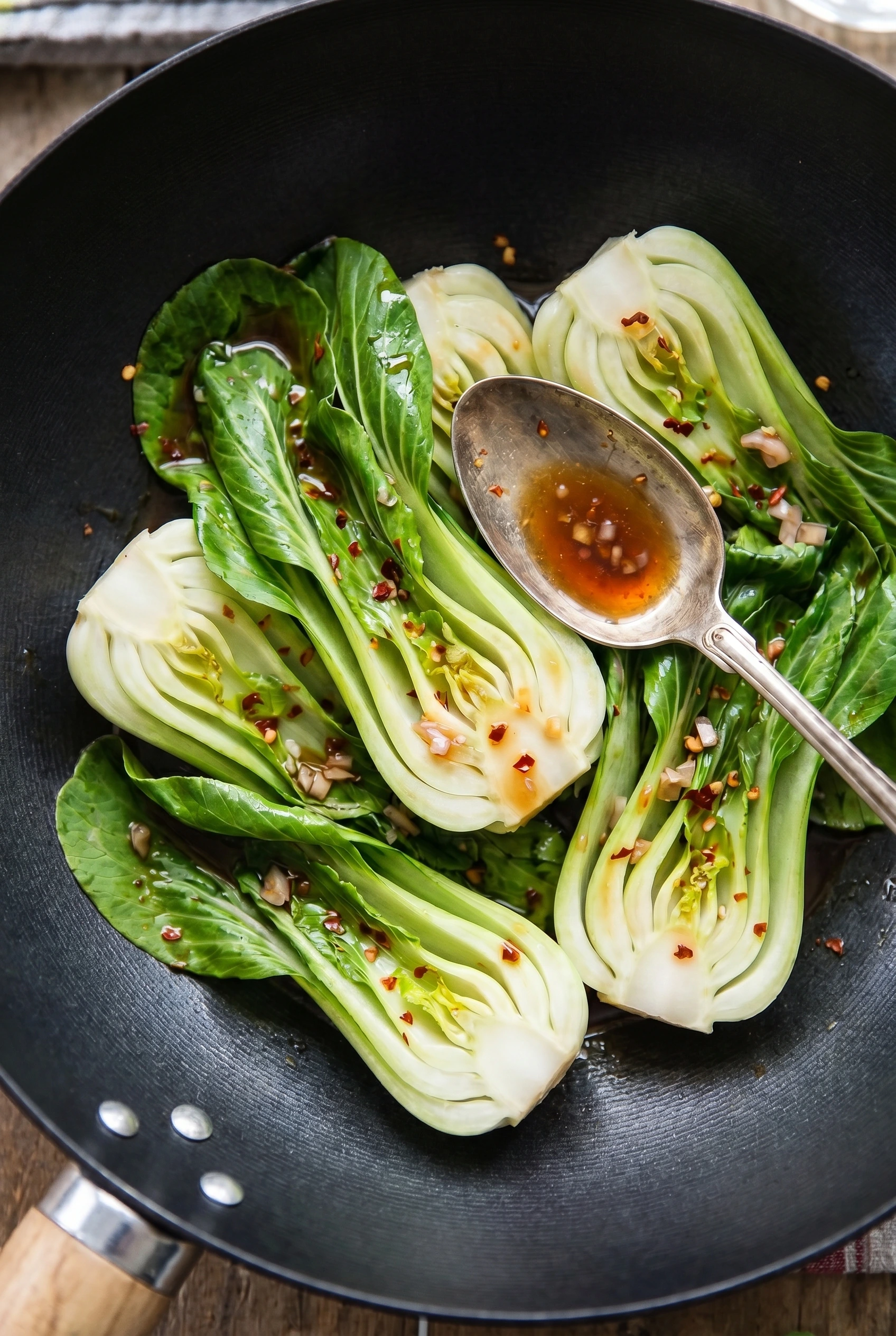
- Add the greens: Drop in the bok choy, pour over the soy sauce, and drizzle in the sesame oil. Toss everything quickly to coat the leaves. I once splashed soy sauce directly onto the hot metal instead of the vegetables, and the resulting smoke alarm test was a humbling experience.
- Steam and finish: Cover the pan with a lid and let it steam for one to two minutes. Uncover, toss again, and cook for another three to five minutes until the stalks reach your preferred tenderness. A slightly crunchy stalk is totally fine and honestly better than a mushy one.
- Garnish and serve: Sprinkle the crushed red pepper over the top if you want some heat. Move the sauteed bok choy to a serving platter immediately so the residual heat does not overcook the leaves.
How to Cut Bok Choy
You rinse the heads well, since grit hides between the stalks. Trim the root end, then halve or quarter baby bok choy straight through the core so each piece holds together. For mature heads, you slice the thick white stalks away from the leaves and cut the stalks into bite-sized pieces. The stalks take longer to cook, so you start them ahead of the tender green tops.
Seasoning and Taste as You Go
You must taste a leaf before you plate the dish. The balance of salt and fat dictates whether this tastes like a restaurant side or sad diet food.
- Too flat? Add a tiny splash of rice vinegar or a squeeze of lime juice. Acid wakes up the heavy soy flavors.
- Too salty? You likely added too much soy sauce. Toss in a pinch of sugar or a splash of water to dilute the saltiness.
- Needs depth? Add a dash of fish sauce or grate some fresh ginger over the top while it is still hot.
♥ The Misfit Tips!
- Dry the leaves thoroughly. I once tossed wet greens into hot oil and the popping oil covered my forearms while the vegetables steamed into a soggy heap. A salad spinner or a clean kitchen towel removes enough surface water to keep the pan dry and the cooking controlled.
- Do not crowd the pan. I crammed two pounds of greens into a nine-inch skillet and they sat in their own steam for six minutes without browning once. You cook in two batches in a small pan. The extra minutes are worth the texture.
- Add stalks first. You start the thick white stalks in the pan two minutes before the leafy green tops when you work with mature heads. Baby bok choy halves do not need this treatment, but mature heads absolutely do.
Make It Yours
Turn it into a full bok choy stir fry
You add cubed firm tofu, sliced chicken breast, or peeled shrimp to the hot oil before the aromatics and cook the protein fully before the bok choy goes in. The result is a complete bok choy stir fry that needs only a bowl of rice to become dinner.
Try roasted bok choy for a hands-off version
You toss halved heads in vegetable oil, a drizzle of soy sauce, and a pinch of garlic powder, then spread them cut-side down on a rimmed baking sheet. You roast at 400 degrees Fahrenheit for twelve to fifteen minutes until the cut edges turn golden and slightly crisp. Roasted bok choy tastes sweeter and more concentrated than the stovetop version, and it requires no active attention while it cooks.
Other easy swaps
- Add crunch. You scatter toasted cashews or sesame seeds over the finished dish right before serving.
- Make it vegan. The base recipe contains no animal products. You check your soy sauce or tamari label to confirm it fits your needs.
How to Store Bok Choy
❤
- Fridge. You keep leftovers in an airtight container for up to three days. The leaves soften and lose their color, but the flavor holds well.
- Freezer. You skip the freezer entirely. The high water content turns the leaves grainy and limp when thawed.
- Reheat. You warm leftovers in a skillet over medium heat with a small splash of water. A microwave works in a pinch but makes the stalks rubbery.
- Note. The crushed red pepper flakes intensify as the dish sits overnight, so leftovers carry more heat than the fresh version.
Easy Stir-Fried Bok Choy Recipe
Ingredients
Equipment
Method
- Heat the oilYou set your wok or skillet over medium-high heat and swirl in the vegetable oil to coat the surface. You wait until the oil shimmers before you add anything. A cold pan means food sticks and nothing browns properly, so you give it a full minute to come to temperature.
- Sauté the aromaticsYou add the minced garlic and shallots and stir them constantly for one to two minutes until the kitchen smells unmistakably good. Garlic burns fast at this heat, and burnt garlic tastes like bitter regret that no sauce can fix. You keep the spatula moving.
- Add the bok choyYou lay the halved bok choy pieces cut-side down in the pan and let them sit undisturbed for one minute to develop a light sear on the flat side. Then you pour the soy sauce over everything and drizzle the sesame oil around the edges of the pan so it hits the hot surface and releases its aroma immediately. You toss everything quickly to coat. I once splashed soy sauce directly onto the bare metal instead of the vegetables and the smoke alarm gave me a thorough review of my technique. Keep the liquid aimed at the greens.
- Steam and finish for your preferred texture: sautéed or steamedYou cover the pan with a lid and let it steam for one to two minutes. The trapped moisture softens the thick white stalks while the leaves wilt evenly. For sauteed bok choy with more color and some caramelization on the cut sides, you remove the lid and cook for another two to three minutes over medium-high heat. You toss once and check the stalk tenderness with a fork. A slight crunch in the center tastes better than a completely soft stalk.
- Garnish and serveYou scatter the crushed red pepper over the top if you want heat and move the finished bok choy to a serving platter immediately. The residual heat of the pan continues cooking the leaves if you leave them sitting in it, so you plate quickly and eat soon.