
A bowl of hot, buttery mashed potatoes streaked with tender green cabbage fixes a cold evening faster than any delivery app ever could. This colcannon recipe skips the green, gluey wallpaper paste I once served my in-laws and goes straight to the real thing, where the potatoes stay fluffy and the greens get cooked in an amount of butter that feels excessive until you taste the result.
These colcannon potatoes use cheap ingredients, one pot of boiling water, and about fifteen minutes of actual kitchen work. You end up with a bowl of cabbage and mashed potatoes Irish families actually eat with enthusiasm.
reader review
“Absolutely the best colcannon I have ever made. Buttery Buttery and Buttery. The green cabbage in all that butter made my whole kitchen smell incredible, and the crispy skillet reheat the next day was even better than the first bowl. My husband asked me to make this every Sunday now !!!!!” – Brigid O.
Loved this too? Add your reviewWhy You’ll Love This Recipe
- Minimal active time. You boil the potatoes in one pot and fry the greens in another at the same time, so your hands do about fifteen minutes of real work.
- Dirt cheap ingredients. Potatoes and greens cost less than a fancy coffee, which makes these colcannon potatoes one of the cheapest ways to fill a table.
- Hidden vegetables. The butter and milk turn standard spuds into a rich base that carries a big pile of leafy greens without anyone feeling lectured about fiber.
- Highly versatile. You serve it as a lazy Tuesday side dish or eat a giant bowl of it as the main event when you want carbs for dinner and nothing else.
Perfect Pairings
This dish hits heavy, so it needs sides that stand up to the dairy and starch.
- A thick slice of crusty soda bread mops up the extra melted butter at the bottom of the bowl.
- Roasted carrots with a sharp vinegar glaze cut straight through the creaminess and keep the plate from tasting like one long note.
- A dry stout or a crisp apple cider balances the dense, rich potato base with bitterness or bright acidity.
A rainy weeknight with no plans suits this bowl perfectly.
Tools You’ll Need
Nothing fancy, I promise.
- Large Pot – You need something big enough to hold two pounds of potatoes without boiling over onto your stove and making a mess.
- Potato Masher – A basic potato masher does the job perfectly. Do not use a blender or food processor unless you enjoy eating actual glue.
- Colander – Drain the boiled chunks completely dry so your mash does not turn into soup.
Ingredients
❤
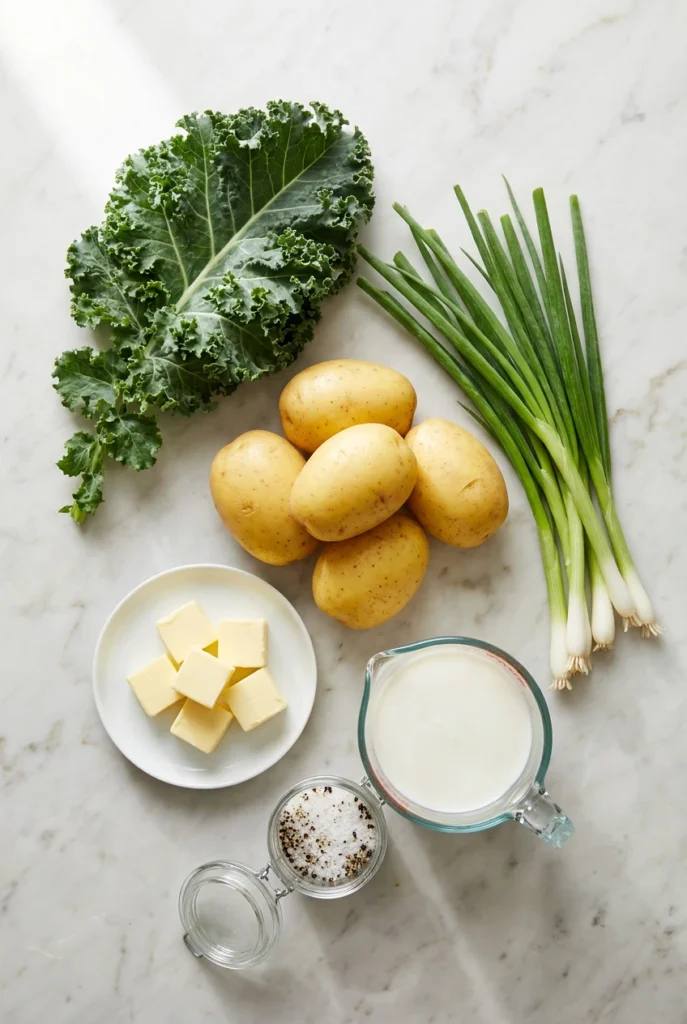
- 2 pounds Yukon gold or Russet potatoes – Yukon golds give you a naturally buttery texture, but russets work fine if you want a lighter, fluffier mash.
- 6 tablespoons unsalted butter – This is where the flavor lives, so use the good stuff. If you use salted butter, hold back on adding extra salt until the very end.
- 4 cups chopped kale or cabbage – Tuscan kale holds up well, but standard green cabbage is cheaper and gets wonderfully sweet when fried in butter. The classic cabbage potato ratio is totally up to you.
- 3 green onions – These add a sharp, fresh bite that keeps the whole dish from tasting completely flat and heavy.
- 1/2 cup milk – Whole milk gives you the best texture, but whatever sits in your fridge will get the job done.
- Salt and pepper – Potatoes swallow salt whole, so you will need more than you think to wake this up.
Instructions
Boil the starches, fry the greens, and smash them together before you lose your motivation to cook.
- Boil the potatoes: Place the potatoes in a large pot and cover with cold water, with about an inch of water above the potatoes. Bring to a boil and cook for 15-20 minutes, or until fork tender. Start with cold water so they cook evenly; dropping them straight into boiling water leaves the centers raw and crunchy.
- Cook the greens: Meanwhile, melt the butter in a separate large pot over medium heat and add the chopped kale. Cook the kale for 3-4 minutes, until wilted. Add the green onions (reserve a small amount for garnish) and stir together for another minute. Do not skip the butter here, or you are just eating sad, wet leaves.
- Get mashing: Drain the potatoes in a colander, then add them to the kale. Pour in the milk, and season with salt and pepper. Mash the potatoes with the greens until fluffy and well combined. A few lumps are totally fine and prove you actually made this from scratch.
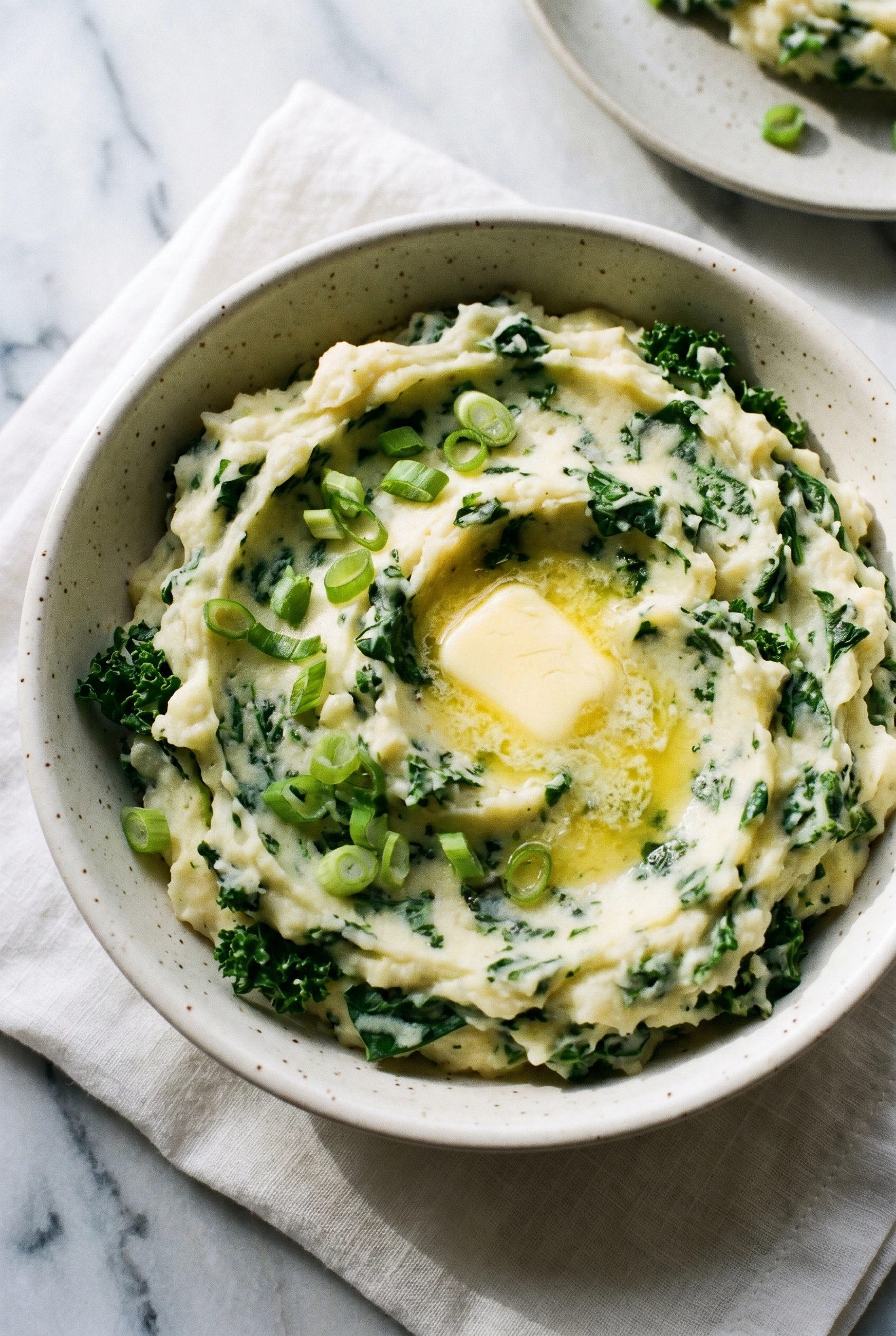
- Serve it up: Transfer the colcannon to a serving bowl and top with a light sprinkle of green onion and a pat of butter. If the butter does not melt immediately into a little golden pool, your mash is too cold.
Seasoning and Taste as You Go
Potatoes swallow seasoning without complaint, so you taste before you plate and adjust aggressively.
- Too flat. You add a heavy pinch of kosher salt and stir it through. If the mash still tastes dull after that, a small splash of apple cider vinegar lifts all the flavors without adding sourness.
- Too salty. You pour in a little extra warm milk and mash in one more plain boiled potato to spread the salt across more starch.
- Needs depth. You stir in a spoonful of roasted garlic or a heavier dose of black pepper to give the dairy backbone.
♥ The Misfit Tips!
- Drain them properly. I once left boiled potatoes sitting in their hot water while I answered a phone call. They absorbed the liquid and turned mealy and waterlogged. You drain them immediately and let them steam dry in the colander. Dry starch grabs butter and milk in a way that tastes creamy instead of thin.
- Make it a full meal. You chop leftover ham or fry bacon bits in the pot before adding the greens, and the rendered fat plus the butter turns colcannon into a complete dinner.
- Explore variations. When you browse cabbage irish recipes for inspiration, you find colcannon made with leeks, scallions, or savoy cabbage. Savoy cooks down faster and tastes milder, which works well when you cook for people who find kale aggressive.
Make It Yours
This cabbage potato mash handles substitutions and additions without losing its character.
- Protein swap. You fold in crispy bacon bits, diced ham, or sliced smoked sausage at the end. The fat clings to the mash and gives every spoonful a smoky depth that feels like a proper meal.
- Vegetarian or vegan version. You swap the butter for good olive oil and the dairy milk for unsweetened oat milk. The result tastes slightly earthier and less rich, but the green base still holds together well.
- Spice and heat. You throw a pinch of crushed red pepper flakes into the butter while the greens cook. The heat builds slowly and gives the mash a quiet warmth that tastes intentional.
- Diet adaptation. The dish runs naturally gluten-free as long as you check labels on any add-ins. For a lower-carb version, you replace half the potatoes with steamed cauliflower florets. The texture thins and the flavor shifts, but the greens and butter still carry the bowl.
You can also turn leftovers into colcannon soup by thinning a generous scoop with hot chicken or vegetable stock in a small pot, whisking until it smooths into a thick, creamy broth. A crack of black pepper and a drizzle of cream on top turn yesterday’s side dish into a new bowl entirely.
Troubleshooting Guide
Something went sideways? Been there. Here is how to fix it.
- Problem: my potatoes are gummy
Why it happened: Mashing them in a blender or food processor destroys the starches and creates a glue-like paste.
Fix it: You cannot un-glue them, but you can spread the mixture in a baking dish, top with cheese, and bake until crispy to hide the weird texture.
- Problem: my colcannon is watery
Why it happened: You did not drain the boiled chunks well enough, or your greens released too much liquid during the sauté phase.
Fix it: Put the pot back on low heat and stir constantly for three minutes to evaporate the excess moisture.
- Problem: it tastes bland
Why it happened: Starches need an aggressive amount of salt to taste like anything at all.
Fix it: Stir in half a teaspoon of kosher salt and taste again. Keep going until it actually tastes good.
How to Store Colcannon
❤
- Fridge. You keep leftover colcannon in an airtight container for up to four days. The greens lose some brightness, but the flavor holds well.
- Freezer. You freeze portions flat for up to two months. You thaw them overnight in the fridge and reheat with a splash of hot milk or cream stirred in over low heat to smooth out any graininess.
- Reheat. You warm leftovers in a skillet with a knob of butter over medium heat. The bottom picks up crispy edges that taste better than the original mash. A microwave works when time runs short, but the skillet wins.
- Garnish. You keep fresh green onions off any portion you plan to store. You add them at serving time so they stay bright and sharp instead of wilting overnight.
Colcannon (Irish Mashed Potatoes)
Ingredients
Equipment
Method
- Boil the potatoesYou peel the potatoes if you want a smooth result, or scrub them and leave the skins on for a more textured bowl. You cut them into roughly equal pieces so they cook at the same pace. You place the chunks in your large pot and cover them with cold water by about an inch. You bring the pot to a boil over medium-high heat, then reduce to a steady, rolling boil. You cook for fifteen to twenty minutes until a fork slides into the thickest piece without resistance.
- You start in cold water on purpose. Dropping potatoes into already-boiling water cooks the outside before the center catches up, and you get soft edges with crunchy middles that taste terrible in mash.
- You drain the potatoes in the colander as soon as they turn tender. You let them sit and steam for two full minutes before you mash anything. Surface water that evaporates now cannot thin your mash later.
- Cook the greensWhile the potatoes boil, you melt the butter in a separate large pot over medium heat until it foams. You add the chopped kale or shredded green cabbage and stir to coat every piece. You cook the greens for three to four minutes until they wilt and soften but still carry a little color and texture. You add most of the sliced green onions and stir for another minute so they soften slightly without losing their bite. You hold back a small pinch of raw onion for the garnish.
- You never skip the butter in this step. Steaming the greens in water produces flat, wet leaves that make the whole dish taste watery and underdone.
- Get mashingYou tip the drained potatoes directly into the pot with the greens. You pour in the milk and add a generous pinch of salt and several cracks of black pepper. You press the masher down and work through the pot until the potatoes break down and merge with the cabbage into a fluffy, green-streaked mash. You stop before every last lump disappears, because small lumps taste honest and keep the texture interesting.
- You taste a spoonful before you move the pot off the stove. You ask whether it tastes rich, seasoned, and balanced. If the answer hesitates, you adjust.
- Serve it upYou transfer the colcannon to a warm serving bowl. You scatter the reserved sliced green onions over the top. You press a well into the center of the mash with a spoon and drop in a pat of cold butter. If the butter does not begin melting into a golden pool within thirty seconds, the mash cooled too fast and needs a quick stir over low heat before it reaches the table.