
Some evenings the craving lands exactly between a chewy chocolate cookie and a dense fudgy brownie, and making both feels like a commitment nobody asked for on a Tuesday.
These brownie cookies solve that problem in one bowl with one batch and zero compromise on either texture. This brownie cookies recipe uses melted baking chocolate, brown sugar, and whipped eggs to produce a cookie with a shiny crackly top, crisp edges, and a center that stays genuinely fudgy all the way through.
The first time you make this cookie brownie hybrid, you will eat three of them off the cooling rack before they reach the serving plate.
reader review
“Crackly Crackly and Crackly. I made this brownie cookies recipe on a Wednesday night and the tops came out perfectly shiny just like the photos. My kids ate five between them before I could get the container closed. The espresso powder trick is absolutely genius and I will never skip it again. ” – Monique B.
Loved this too? Add your reviewWhy You’ll Love This Recipe
- The chill time is twenty minutes. That is exactly how long it takes to hand-wash the bowls you already used, which means no staring at the clock.
- The texture delivers both worlds in one bite. You get the slightly crispy edge of a corner brownie piece and the gooey, fudgy center of a middle piece every single time.
- These travel well. You bring them to a potluck or a party and carry home an empty container every time without exception.
- The method stays practical. You melt chocolate, whip eggs, and combine two bowls. The only way to ruin these is to scramble your eggs with hot chocolate or skip the refrigerator step, both of which this article covers in full.
Tools You’ll Need
Nothing fancy, I promise.
- Medium cookie scoop. This batter runs sticky enough that rolling it by hand produces a mess and inconsistent sizes. A medium scoop drops uniform balls and releases the dough cleanly.
- Three mixing bowls. One for the dry ingredients, one for the butter and egg mixture, and one for the melted chocolate. The bowls come together quickly and the washing makes sense in order.
- Double boiler or heatproof bowl. You set a heatproof bowl over a small pot of simmering water to melt the chocolate without scorching it. A microwave in twenty-second bursts works equally well if you stir between intervals.
Ingredients
- 2 four ounce bars (226g) semi-sweet chocolate – Use the good baking bars, not chocolate chips, because chips have stabilizers that mess up the final texture.
- 3/4 cup (94g) all-purpose flour – Spoon and level it unless you want dry, sad disks instead of chewy cookies.
- 1/4 cup (21g) natural unsweetened or dutch-process cocoa powder – Either works, just make sure it is unsweetened.
- 1 teaspoon espresso powder – This does not make it taste like coffee, it just makes the chocolate taste more intense (science is weird, check out how cocoa solids work if you are a baking nerd like me).
- 1 teaspoon baking powder – Check the expiration date. I once used expired baking powder and ended up with chocolate hockey pucks.
- 1/4 teaspoon salt – Essential to balance out the intense sugar rush.
- 5 Tablespoons (71g) unsalted butter – Make sure it is softened to room temperature, not melted into a greasy puddle.
- 3/4 cup (150g) packed light brown sugar – The molasses in this keeps the cookies delightfully chewy.
- 1/4 cup (50g) granulated sugar – Helps give us those gorgeous crackly tops.
- 2 large eggs – Room temperature! Cold eggs will seize up your melted chocolate and ruin your entire day.
- 1 teaspoon pure vanilla extract – Measure with your heart, but one teaspoon is the official rule.
- 3/4 cup (135g) semi-sweet chocolate chips – Optional, but are extra chocolate chips ever really optional?
Instructions
Do not let the three bowls intimidate you; the process moves fast and the payoff is aggressively worth the minor dishwashing.
- Melt the chocolate: Melt your chopped chocolate bars in a double boiler or the microwave in 20-second bursts. Let it cool slightly if you pour boiling hot chocolate into your egg mixture, you will make chocolate scrambled eggs, and nobody wants that.
- Whisk the dry stuff: In a medium bowl, whisk together the flour, cocoa powder, espresso powder, baking powder, and salt. If you skip whisking and end up with a clump of baking powder in your cookie, that is between you and your tastebuds.
- Cream the butter and sugars: In a large bowl, beat the softened butter, brown sugar, and granulated sugar on medium-high speed for about 3 minutes until smooth.
- Add eggs and vanilla: Beat in the room-temperature eggs and vanilla on high speed for 2 full minutes. Scrape down the bowl, beat for another minute, then pour in the cooled melted chocolate and mix for 2 more minutes. This aggressive whipping whips air into the batter, which is the secret to that shiny, crackly top.
- Combine wet and dry: Pour the dry ingredients into the wet and mix on low just until combined, then fold in the chocolate chips. The dough will look incredibly soft and sticky—do not panic and add more flour, it is supposed to look like a mess right now.
- Chill the dough: Cover the bowl and put it in the fridge for exactly 20 minutes while you preheat the oven to 350°F (177°C). I once forgot about the dough in the fridge for an hour and had to basically chisel it out of the bowl.
- Scoop and bake: Scoop 1.5-tablespoon balls of dough onto lined baking sheets, spacing them 3 inches apart. Bake for 12-13 minutes until the edges are set. The centers will look raw and wobbly—leave them alone, they firm up as they cool!
♥ The Misfit Tips!
- Respect the chill time. I skipped the refrigerator step once in a hurry and watched the dough spread into one large, greasy chocolate sheet that fused to the parchment and tore apart when I tried to separate pieces. Twenty minutes protects the entire batch.
- Use baking bars for the melted base. Standard chocolate chips melt with a duller finish and produce a flat, matte top instead of the glossy crinkle that makes these marbled chocolate brownies look impressive. You save the chips for the fold-in step only.
- Warm your eggs deliberately. I placed a cold egg directly into warm melted chocolate once and watched the chocolate seize into grainy chunks around it. Five minutes in a bowl of warm water before cracking them prevents this completely.
Make it yours
- Brownie mix shortcut. You follow the brownie mix cookies recipe variation above when you want the result without the from-scratch process. The texture runs slightly less rich but still produces a chewy, crinkled cookie in under thirty minutes total.
- Add-ins. You fold in a half cup of chopped walnuts or pecans with the chocolate chips for crunch that contrasts the fudgy center.
- Flavor additions. You add a quarter teaspoon of cayenne to the dry ingredients for a Mexican chocolate variation, or a half teaspoon of peppermint extract to the wet ingredients for a mint chocolate version.
- Sea salt finish. You press a few flakes of Maldon sea salt onto the top of each dough ball before baking and the salt amplifies the chocolate intensity in a way that turns a good cookie into an exceptional one.
Perfect Pairings
This cookie brownie hybrid needs companions that cut through a serious amount of chocolate.
- A very cold glass of whole milk provides the contrast that makes each bite taste cleaner and richer at the same time.
- Two cookie brownies sandwiching a scoop of vanilla bean ice cream produce a dessert that justifies an immediate nap and zero regrets.
- A strong black coffee on a chaotic weekday morning turns one of these into a breakfast that nobody should apologize for.
A robust red wine on a weeknight works equally well, because adults make their own decisions about dessert.
How to Store Brownie Cookies
❤
- Fridge. You keep baked cookies in an airtight container for up to one week. Cold storage makes the texture denser and almost truffle-like, which suits the ones you eat straight from the fridge at midnight.
- Freezer. You freeze baked cookies or raw dough balls in an airtight container for up to three months. You bake frozen raw dough balls directly from the freezer with one extra minute added to the bake time. You thaw baked frozen cookies at room temperature for thirty minutes.
- Reheat. You microwave a cold cookie for ten seconds and it tastes nearly identical to one just pulled from the oven. You skip the toaster oven, which melts the chocolate chips onto the heating element and creates a cleaning task that lingers.
- Storage note. Chocolate absorbs refrigerator odors efficiently, so you keep the container airtight and away from garlic, onion, or anything else that could transfer its smell into your brownie cookies overnight.
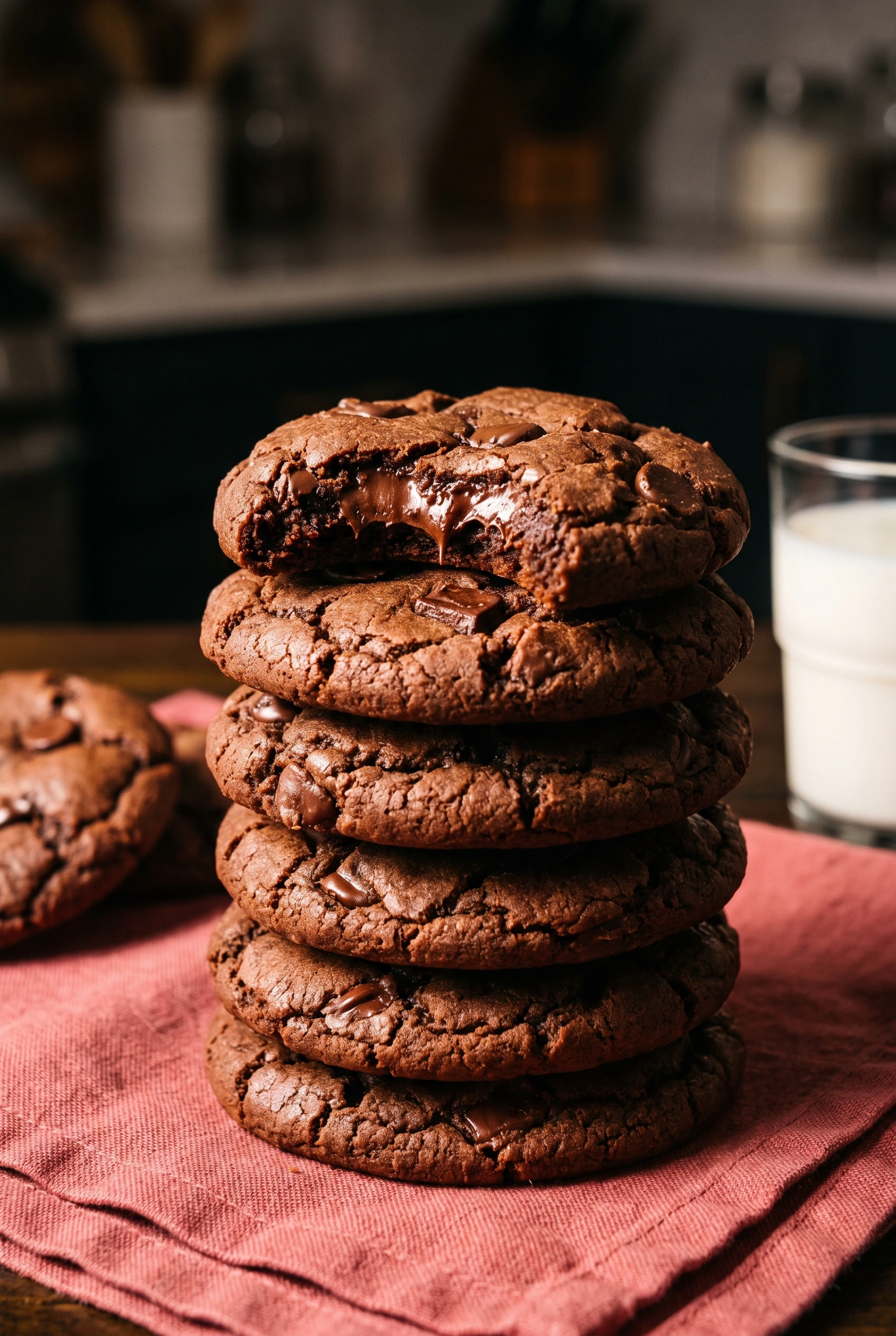
Brownie Cookies
Ingredients
Equipment
Method
- Melt the chocolateYou chop the baking bars into rough pieces and melt them in a double boiler over gently simmering water, stirring until smooth. Alternatively, you microwave the chopped chocolate in a microwave-safe bowl in twenty-second bursts, stirring after each interval, until the chocolate melts into a glossy liquid. You set the bowl aside and let it cool until it feels warm but not hot to the touch. Pouring hot chocolate into the egg mixture cooks the eggs on contact and produces scrambled chocolate eggs instead of a smooth batter.
- Whisk the dry ingredientsYou combine the all-purpose flour, cocoa powder, espresso powder, baking powder, and salt in a medium bowl and whisk them together until no visible clumps of cocoa or baking powder remain. A clump of baking powder in a finished cookie tastes like a small chemical explosion in that bite.
- Cream the butter and sugarsYou beat the softened butter, brown sugar, and granulated sugar together in a large bowl on medium-high speed for three full minutes until the mixture turns pale and smooth. You use a hand mixer or a stand mixer fitted with the paddle attachment. Three minutes feels long, but the creaming step builds the air structure that supports the crackly top.
- Add eggs, vanilla, and chocolateYou add the room-temperature eggs and vanilla extract to the butter mixture and beat on high speed for two full minutes. You scrape the sides and bottom of the bowl with a spatula, then beat for one additional minute. The mixture looks pale, thick, and slightly fluffy after this step. You pour in the cooled melted chocolate and beat for two more minutes until the batter turns deep brown and uniform. This total whipping time is the primary driver of the shiny, crinkled surface that makes a proper brownie cookie recipe visually distinct from a plain chocolate cookie.
- Combine and chillYou add the dry ingredient mixture to the wet batter and mix on low speed just until no dry flour remains visible. You fold in the chocolate chips with a spatula. The dough looks very soft and sticky at this stage, almost like a thick frosting. You do not add more flour. You cover the bowl and refrigerate the dough for twenty minutes while you preheat the oven to 350°F.Chilling the dough firms up the fats and prevents the cookies from spreading into flat puddles on the baking sheet. I once skipped this step because the dough felt manageable at room temperature and ended up with one continuous chocolate sheet across the entire pan. The twenty minutes are non-negotiable.
- A note on the brownie mix cookies recipe shortcutIf you need the cookie brownie experience in less time, you can use one box of fudge brownie mix combined with two eggs, half a cup of vegetable oil, and a quarter cup of flour to produce a brownie mix cookies recipe that bakes in twelve minutes with a similar crinkled top. The from-scratch version in this article tastes richer and more complex, but the mix shortcut works on the nights when standing over a double boiler feels like too much.
- Scoop and bakeYou use a medium cookie scoop to drop one-and-a-half-tablespoon balls of dough onto parchment-lined baking sheets, spacing each ball three inches apart. You bake at 350°F for twelve to thirteen minutes until the edges look set and the tops develop a matte, crinkled surface. The centers look underdone and slightly wobbly when you pull the pan. You leave them on the sheet for five minutes before transferring to a wire rack, and the residual heat firms the centers into the fudgy texture that defines a proper cookie brownie.