
A head of green cabbage ignored for five days in the crisper drawer and a forgotten pack of smoked Kielbasa produced this cabbage and sausage recipe that now makes a regular appearance on the weeknight rotation for good reason.
This sausage and cabbage recipe builds everything in a single cast iron skillet, browns the meat until crispy, and wilts the greens in the seasoned butter that collects in the pan, producing a heavy, filling dinner in under twenty minutes with one pan to wash. No complicated technique, no grocery run required. Here is exactly how I do it.
reader review
“Easy Easy and Easy. I made this on a Wednesday night after a long day and had it on the table in under 20 minutes. The diagonal cut on the sausage is a game changer, so much more crispy than I expected. My whole family cleaned their plates and asked when I was making it again. Thank you Thank you Thank you!!!!!” – Donna K.
Loved this too? Add your reviewWhy You’ll Love This Recipe
- One pan, one round of dishes. Everything browns, wilts, and finishes in a single 12-inch cast iron skillet. The whole dinner comes together before the cutting board is even dry.
- On the table in twenty minutes. The meat sears in five minutes and the cabbage wilts in three to ten depending on how soft you want the texture. No simmering, no resting, no waiting.
- Budget-friendly by design. A head of green cabbage costs under two dollars and stretches one twelve-ounce package of smoked sausage into a full dinner for four people.
- Naturally low-carb and gluten-free. The recipe contains no pasta, no bread, and no fillers as written. Verify that your specific sausage brand lists no hidden starch or wheat in the ingredients.
Tools You’ll Need
Nothing fancy, I promise.
- 12-inch cast iron skillet. The heavy base holds heat evenly and produces a genuine sear on the sausage slices rather than steaming them. A large stainless steel skillet substitutes effectively. A nonstick pan produces less browning and fewer of the pan drippings that flavor the finished dish.
- Sharp chef’s knife. A dull blade turns chopping a dense head of cabbage into a dangerous, exhausting task. A sharp knife cuts through the core in two clean strokes.
- Large cutting board. Four cups of chopped cabbage takes up significant board space before it wilts. A small board sends half the pieces onto the counter.
Ingredient Notes and Substitutions
❤
- Sausage: I use Kielbasa or Andouille depending on how much heat I want in the finished dish. Chicken sausage works with an extra teaspoon of oil.
- Butter: I use unsalted butter in this recipe. The salt in the sausage itself provides enough sodium, so starting with unsalted butter keeps the seasoning controllable.
- Garlic: I use fresh crushed garlic cloves. Garlic powder substitutes at half a teaspoon if fresh cloves aren’t available.
- Cabbage: I use standard green cabbage, chopped into uniform bite-sized pieces. Savoy cabbage works and wilts slightly faster. Red cabbage turns the pan drippings pink but tastes identical.
- Paprika: I use sweet paprika in this recipe. Smoked paprika substitutes and adds an extra layer of smokiness that pairs well with the Kielbasa.
- Onion powder: I use onion powder to keep the prep fast. One small yellow onion diced and cooked before the garlic substitutes if you want a more textured base.
Instructions
Making fried cabbage and sausage is mostly about letting the heat do the heavy lifting, so just keep an eye on the pan.
- Heat the pan: Heat a 12-inch skillet over medium heat. Spray with cooking spray or add 1 teaspoon of olive oil. Let the pan get fully hot before adding anything, otherwise the meat just steams in its own juices and turns gray.
- Cook the meat: Brown the sliced smoked sausage until lightly crisp. Give the slices space and leave them alone for a minute so they actually develop a crust.
- Clear the skillet: Remove sausage from skillet and set aside. Try not to eat half the slices straight off the plate while you finish cooking the rest of the meal.
- Build the base: Add butter, garlic, chopped cabbage, and spices and stir well. The moisture from the vegetables will help you scrape up all the browned bits left behind by the meat.
- Wilt the greens: Fry cabbage to your desired tenderness. If you would like more crunch this will take 3-4 minutes. If you like your cabbage very tender it will cook closer to 10 minutes. Do not panic when the pan looks overflowing at first, because the greens shrink down dramatically.
- Combine and serve: When the cabbage reaches your desired texture, add the cooked sausage and stir until heated through. Give it one final toss to coat the meat in all that seasoned butter.
How to Cook Cabbage and Sausage: Seasoning as You Go
Tasting right before the heat turns off produces the best final result. Three adjustments cover every common imbalance:
- Too flat: Add a squeeze of fresh lemon juice or a splash of apple cider vinegar to sharpen the flavors and add brightness.
- Too salty: Pour in two tablespoons of chicken broth or water and let the pan simmer for one additional minute to dilute the pan juices.
- Needs depth: Stir in a pinch of red pepper flakes or a dash of hot sauce for background heat that builds with each bite.
How to Make Cabbage and Sausage Your Own Way
This cabbage and sausage formula adapts to most dietary preferences without any structural changes to the recipe:
- Chicken or turkey sausage substitutes for pork at the same quantity. Add one extra teaspoon of olive oil to compensate for the lower fat content.
- Vegetarian version replaces the meat with a smoked plant-based sausage and adds a drop of liquid smoke to the butter to replicate the missing pork smokiness.
- Spice level adjusts by choosing Andouille sausage and adding a quarter teaspoon of cayenne pepper to the spice blend before it goes into the pan.
♥ The Misfit Tips!
- Cook in batches if doubling the recipe. One full head of cabbage dumped into a twelve-inch skillet produces a mountain of greens that steams rather than fries. Two separate rounds in the same pan preserve the high heat and produce the correct texture.
- Slice the sausage on a diagonal every time. A forty-five-degree angle cut doubles the browned surface area per slice. More surface contact with the hot pan produces more of the caramelized crust that makes this dish worth making.
- Chop and store everything the night before. Cabbage and sausage both refrigerate well in separate airtight containers for up to twenty-four hours. Weeknight dinner then takes twelve minutes from cold ingredients to hot plate.
What to Serve With This
This sausage and cabbage recipe stands alone as a complete weeknight dinner, but two additions turn it into a proper spread:
- Crusty bread pressed against the pan to absorb the spiced, buttery pan drippings that collect at the base of the skillet
- A cold pilsner or light lager that cuts through the salt and fat of the smoked meat with every sip
How to Store Cabbage and Sausage
❤
- Fridge. Up to 4 days in an airtight container. The cabbage softens further overnight but the flavor of the seasoned pan drippings deepens.
- Freezer. Skip it. The high water content in cabbage produces a mushy, unappetizing texture after freezing and thawing.
- Reheat. Warm in a skillet over medium-low heat until the butter fat melts and the sausage heats through. Microwaving works but eliminates any remaining crispy edges on the meat.
- Garnish separately. Sliced green onions stored on top of the leftovers in the fridge turn slimy overnight. Add them fresh to each plate at serving time only.
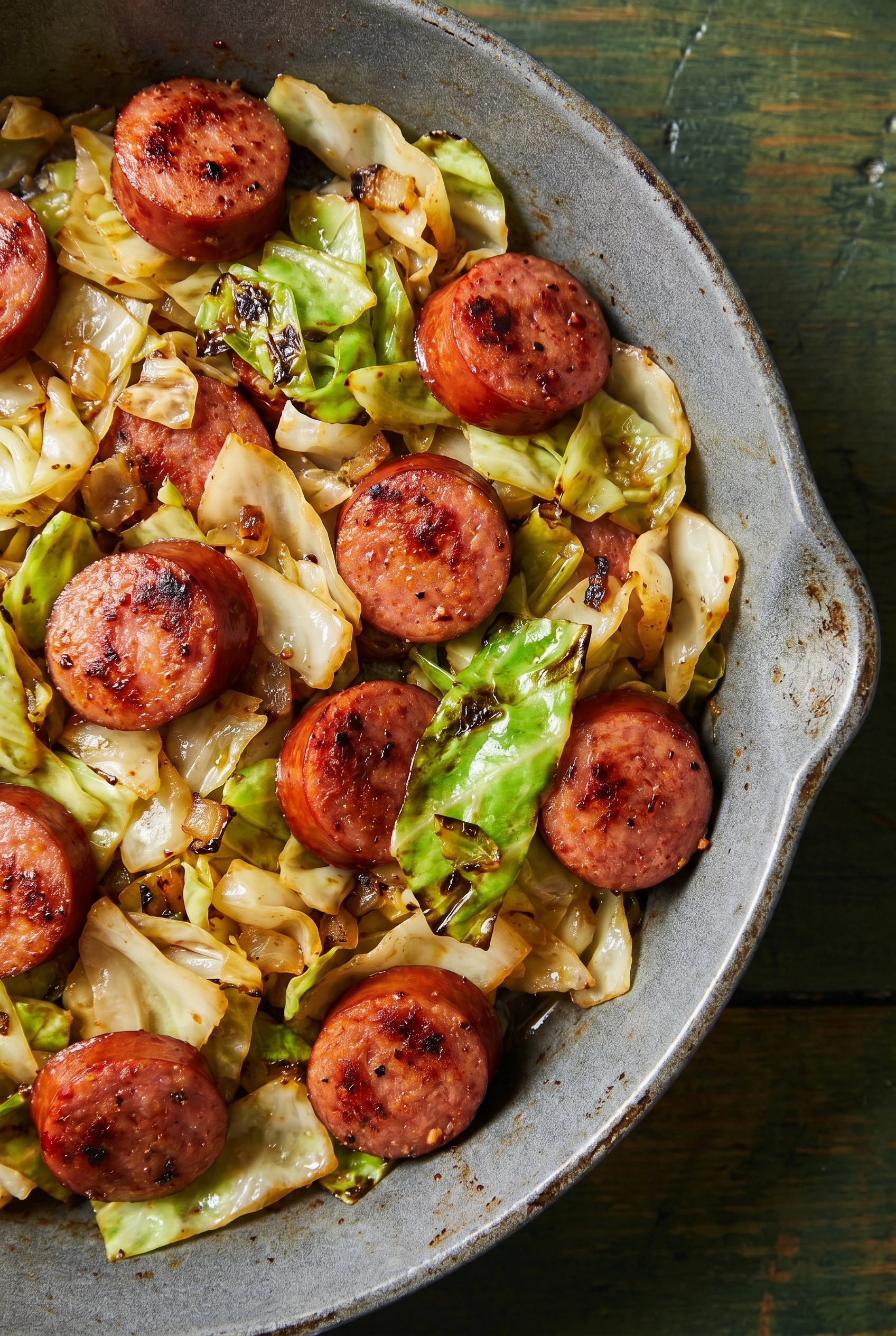
Keto Cabbage with Sausage
Ingredients
Equipment
Method
- Heat the skilletPlace a 12-inch cast iron skillet over medium heat. Add one teaspoon of olive oil or a light coat of cooking spray and let the pan heat fully before adding the meat. A cold pan produces gray, steamed sausage slices rather than a seared, browned crust.
- Sear the sausageSlice the smoked sausage on a diagonal into half-inch-thick rounds. Diagonal cuts create more exposed surface area than straight cuts, which produces more browned, crispy edges per slice. Arrange the slices in a single layer and leave them untouched for 60 to 90 seconds before flipping. Repeat on the second side. Remove the sausage from the skillet and set aside.
- Build the baseAdd the butter directly to the hot skillet. Once it melts, add the crushed garlic and stir for thirty seconds. Add the chopped cabbage, onion powder, paprika, salt, and black pepper and stir well to coat every piece in the seasoned butter. The moisture in the cabbage will lift the browned bits from the bottom of the pan.
- Cook the cabbage to your preferenceFor a tender-crisp texture with some bite remaining, cook for 3 to 4 minutes over medium heat. For fully tender, softened cabbage, cook for 8 to 10 minutes, stirring every two minutes. The cabbage shrinks dramatically during the first two minutes. A pan that looks dangerously overfull at the start reduces to a manageable level within three minutes.
- Combine and serveReturn the seared sausage to the skillet and stir everything together until the meat heats through, about one minute. Give the pan one final toss to coat the sausage in the seasoned pan drippings and serve immediately.