
Three heads of bok choy wilted in my crisper drawer for a week while my plans to become a healthy person quietly died. This bok choy soup rescued them and saved dinner at the same time.
I chopped the sad, neglected greens, dropped them in a pot with ginger and garlic, and acted like I planned the whole thing. Most bok choy soup recipes assume you have hours to simmer a homemade broth.
I lean on store-bought stock and heavy hits of fresh ginger to fake that long-cooked depth in under thirty minutes. The aromatics do the work and the noodles soak up every drop. Here is exactly how I do it.
reader review
Absolutely the best bok choy soup I have ever made. Gingery Gingery and Gingery. I almost added the sesame oil at the start but the recipe stopped me and stirring it in at the end made the whole bowl smell incredible. My husband asked for this three nights in a row and I tossed in rotisserie chicken the last time.– Danielle T.
Loved this too? Add your reviewWhy You’ll Love This Recipe
- Fast. You move from cutting board to hot bowl in under thirty minutes.
- Flexible. You toss in whatever leftover noodles or greens sit wilting in your fridge.
- One-pan cleanup. You wash a single pot and a cutting board, and that closes the job.
- Budget-friendly. A handful of basic pantry staples carries the entire meal.
What to serve with this Choy soup
A bowl of steaming broth wants something to dip into it.
- Scallion pancakes turn fried dough into the best part of the table.
- A simple cucumber salad dressed in rice vinegar and sesame oil cools the palate.
- A cold beer cuts straight through the salty, gingery broth.
- A weeknight on the couch in sweatpants suits this bowl perfectly.
Tools You’ll Need
Nothing fancy, I promise.
- Large pot. You give the broth room to boil without splashing across your stove.
- Chef’s knife. A sharp blade slices the delicate bok choy leaves instead of mangling them.
- Microplane. You grate the ginger fine on this and skip the bloody knuckles a box grater hands you.
Ingredients
❤
- 4 cups vegetable broth – Provides the liquid foundation for the entire meal.
- 2 heads baby bok choy – Brings a mild crunch and slightly bitter green flavor.
- 1 tablespoon fresh ginger – Grated ginger gives the soup its sharp, warming backbone.
- 2 cloves garlic – Minced garlic builds the savory base note.
- 2 tablespoons soy sauce – Adds the essential salt and umami to the broth.
- 1 teaspoon sesame oil – A few drops finish the soup with a rich, roasted aroma.
- 4 ounces ramen noodles – Bulks out the bowl and catches the savory broth.
Instructions
Prep all your ingredients before you turn on the stove, because things move fast.
- Prep the vegetables. Chop the bok choy and separate the white stems from the green leaves. Thrown in together, the leaves turn to mush before the stems soften.
- Sauté the aromatics. Heat the oil in a large pot and cook the ginger and garlic for one minute. You stay at the stove here, because burned garlic tastes like battery acid.
- Simmer the broth. Pour in the broth and soy sauce and bring the liquid to a rolling boil.
- Cook the noodles and stems. Add the noodles and bok choy stems and cook them for four minutes. Pull a noodle out and bite it to check, and remember that slightly off timing still works fine.
- Wilt the greens. Pull the pot off the heat, stir in the bok choy leaves and sesame oil, and serve right away. The greens collapse in the residual heat within seconds.
Seasoning and Taste as You Go
Balancing a simple broth takes ten seconds of real attention. Taste a spoonful before you ladle it out and trust your tongue.
- Flat flavor? Add a splash of rice vinegar to wake up the dull notes.
- Too salty? Pour in a quarter cup of water to soften the broth.
- Lacking depth? Stir in a spoonful of chili crisp or an extra dash of soy sauce.
♥ The Misfit Tips!
- Time the sesame oil. I dumped the sesame oil in at the start of the cook once, and the heat torched its roasted flavor and left a bitter slick behind. You add it off the heat right before serving.
- Upgrade with meat. You turn this into a bok choy chicken soup by stirring shredded rotisserie chicken in during the last minute of cooking. Rotisserie chicken saves you the trouble of poaching breasts from scratch.
- Separate the noodles. You cook the noodles in the broth to save a pot, but eat the bowl right away. Leftover noodles swell overnight and drink every drop of your soup in the fridge.
Make It Yours
This Ginger Bok Choy Soup with Noodles takes adaptations easily.
- Protein swap. Drop in cubed firm tofu or sliced pork belly to make the meal heavier.
- Vegetarian or vegan version. Use vegetable stock and skip any fish sauce for a fully plant-based dinner.
- Spice level. Stir a spoonful of sambal oelek into your own bowl for a sharp kick.
- Diet adaptation. Swap the wheat noodles for rice vermicelli to keep it gluten-free, though rice noodles soften much faster.
How to Store
❤
- Fridge. Store the broth and vegetables in an airtight container for up to three days. The greens fade from their bright color.
- Freezer. Skip the freezer with this one. The bok choy turns to wet tissue paper and the noodles fall apart on the thaw.
- Reheat. Warm the broth gently on the stove until it simmers, which keeps the vegetables from collapsing into mush.
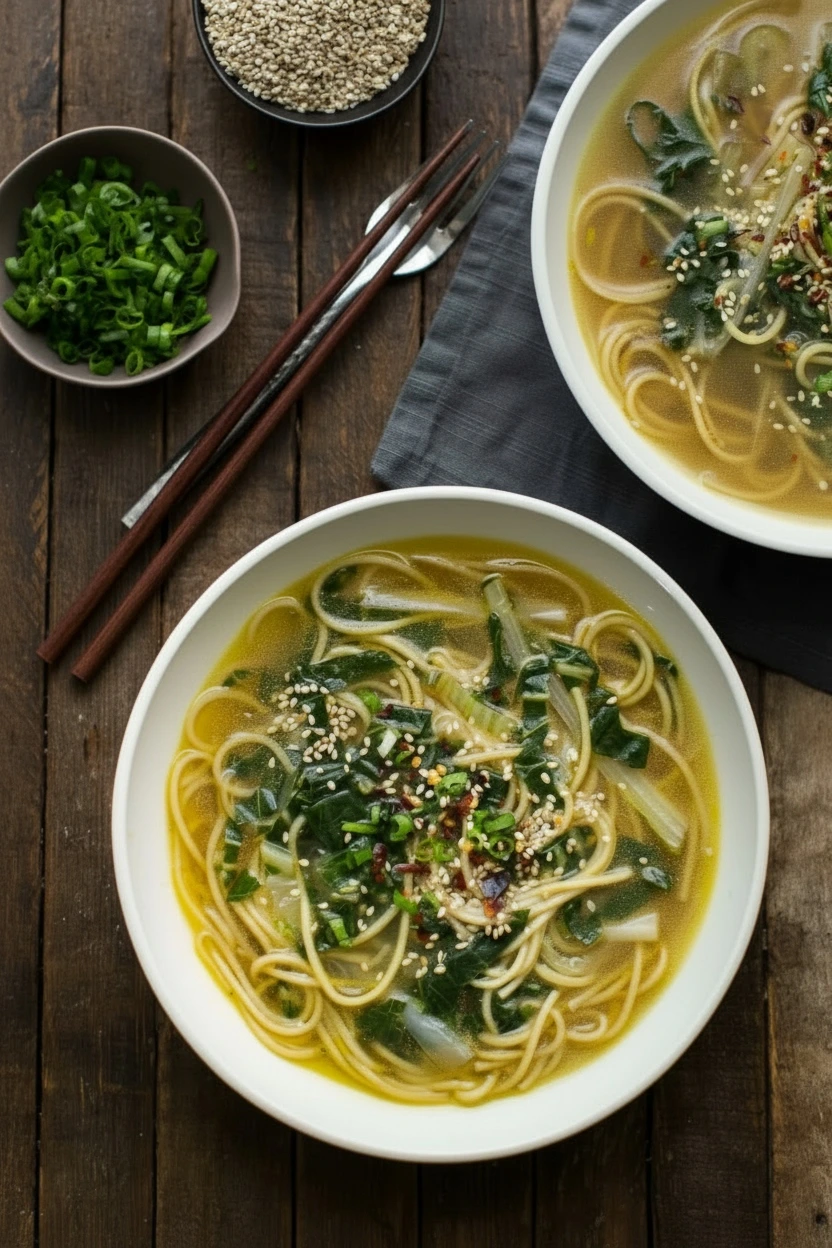
Ginger Bok Choy Soup with Noodles
Ingredients
Equipment
Method
- Prep the vegetablesYou rinse the bok choy thoroughly, because grit hides between the stalks. You trim the root ends, then slice each bulb in half lengthwise. You cut crosswise into bite-sized pieces, separating the crunchy white stems from the tender green leaves. You set each pile in its own spot on the board so you can control when they meet the pot. You mince the garlic and grate the ginger on a microplane until you have a small, fragrant pile.If you decide later to turn this into bok choy chicken soup, you also shred some rotisserie chicken and keep it in a separate bowl until the end.
- Sauté the aromaticsYou set your pot over medium heat and pour in a thin layer of oil. You wait until the surface of the oil shimmers, then add the ginger and garlic. You stir them constantly for about one minute until the garlic smells fragrant and the ginger turns a deeper golden color. You stay near the pot, because burned garlic tastes harsh and bitter and ruins the broth.Many cooking references, including basic food safety guidance, suggest cooking garlic only until fragrant, not browned, for the best flavor. You follow that advice here.
- Simmer the brothYou pour in the broth and soy sauce and stir to scrape up any bits of ginger or garlic that stuck to the bottom. You bring the liquid to a steady simmer that throws small bubbles around the edges. You taste a spoonful here to understand the base salt level so you do not overshoot later.
- Cook the noodles and bok choy stemsYou add the bok choy stems first, since they need more time to soften than the leaves. You pour in your noodles at the same time. You simmer everything together for about four minutes, stirring occasionally so the noodles separate and move freely. You pull out one noodle with chopsticks, bite into it, and look for a texture somewhere between stiff and mushy. Slightly firm in the center works best because the noodles continue to soften in the hot broth.If you add chicken to make a heartier bok choy chicken soup, you stir it in now so it warms through without overcooking.
- Wilt the greens and finish the soupYou turn off the heat. You stir in the bok choy leaves and a drizzle of sesame oil. The residual heat from the broth wilts the greens in under a minute. You taste another spoonful of broth and decide if it needs more soy sauce, a splash of rice vinegar, or a pinch of chile for balance. You ladle the soup into deep bowls, making sure each portion gets noodles, stems, and leaves.