
A head of green cabbage that spent a full week in the refrigerator demanding attention produced this cabbage alfredo that now replaces pasta night at least twice a month in this kitchen.
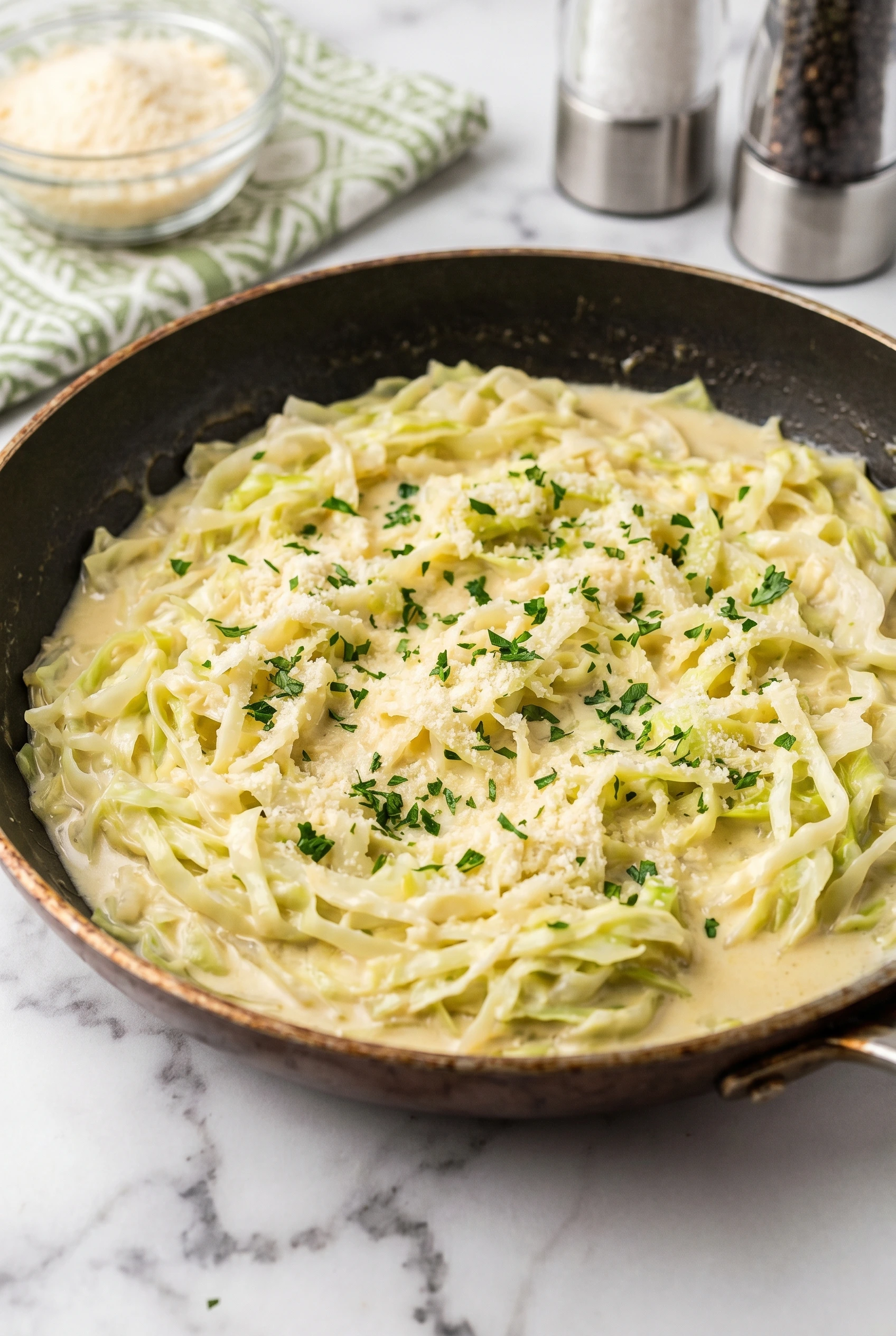
This cabbage alfredo recipe slices a medium head of cabbage into thick ribbons, softens them in olive oil, and coats every strand in a garlic butter and heavy cream sauce finished with freshly grated parmesan and a pinch of nutmeg.
The sauce clings to the sturdy cabbage in exactly the way it clings to fettuccine, and the whole pan comes together in twenty minutes. Here is exactly how I do it.
reader review
“Rich Rich and Rich. I made this cabbage alfredo on a Tuesday night and my husband thought I had ordered from a restaurant. I drained the cabbage on a paper towel exactly like it says and the sauce stayed thick and creamy all the way to the bottom of the bowl. This is my new weeknight secret weapon.” – Karen B.
Loved this too? Add your reviewWhy You’ll Love This Recipe
- One pan, one cleanup. The cabbage softens in the skillet, comes out to rest, and the Alfredo sauce builds in the same pan from the same burner. No secondary pots.
- Budget comfort food. Heavy cream and a block of parmesan transform a two-dollar head of cabbage into a dinner that reads expensive on the plate.
- Twenty minutes, start to finish. The cabbage needs ten to twelve minutes to soften. The cream sauce thickens in five. The whole dish beats any delivery option on time.
- Scales for a crowd. Double the cabbage and sauce quantities and the one-pan method still works without any technique adjustment.
Tools You’ll Need
- Large skillet, 12-inch minimum. A wide cooking surface gives the cabbage ribbons enough room to soften without steaming against each other. A crowded pan traps moisture and produces limp, waterlogged cabbage rather than softened ribbons with texture.
- Sharp chef’s knife. A dull blade slides off a dense cabbage head and requires unsafe pressure to cut through. A sharp knife produces clean, uniform quarter-inch ribbons in under three minutes.
- Whisk. Breaks the grated parmesan into the hot cream evenly and prevents any clumps from forming at the bottom of the pan where the heat concentrates.
Ingredients
Cabbage
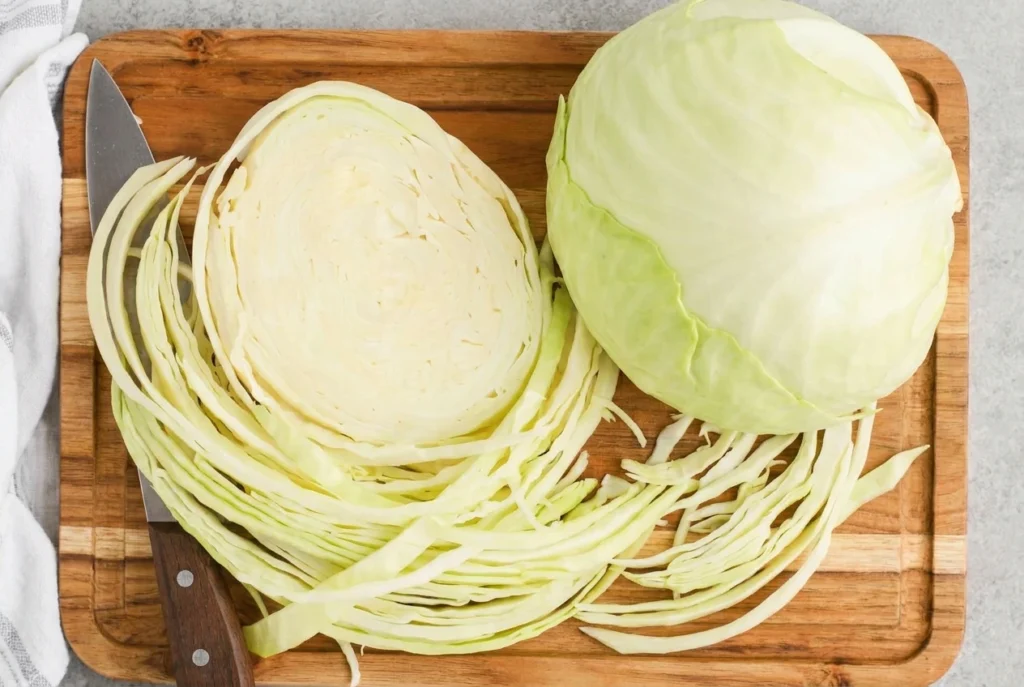
- 1 medium head cabbage – Sliced thick so it holds up to the heavy sauce instead of turning to mush.
- 1 Tablespoon olive oil – Helps soften the cabbage without burning.
- salt and pepper to taste – Draws moisture out of the cabbage while it cooks.
Alfredo Sauce
- 1/4 cup butter – Provides the fat base for cooking the garlic and starting the sauce.
- 2 cloves garlic – Minced fresh garlic adds the necessary aromatic punch.
- 1 cup heavy cream – The backbone of the sauce that thickens beautifully as it simmers.
- 1 cup parmesan cheese – Grate your own parmesan cheese from a block so it melts smoothly without clumping.
- 1/4 teaspoon salt and pepper – Seasons the cream directly.
- pinch nutmeg – Adds a subtle warmth that traditional cream sauces rely on.
Instructions
Sauté the cabbage first, then make the sauce in the same pan to save yourself the dishwashing nightmare.
- Prep the cabbage: Slice cabbage into long thick strips. Heat oil in a large pan and add the cabbage. Cut the strips at least a quarter-inch wide so they maintain some bite instead of turning into sad mush.
- Cook the cabbage: Cook for 10-12 minutes or until the cabbage starts to soften. Remove from the pan and set aside. Do not rush this step, as undercooked cabbage ruins the whole dish.
- Sauté the garlic: Melt butter in the same pan and add the garlic, cook for 30 seconds or until fragrant. Watch the pan closely, because burnt garlic tastes bitter and you will have to start over.
- Simmer the cream: Stir in the cream and simmer until it starts to thicken about 5 minutes. Let it bubble gently so the water evaporates and leaves a rich coating behind.
- Melt the cheese: Turn heat down to low and whisk in the cheese and seasonings mixing until it is melted. Take the pan off the heat if it bubbles too aggressively, as high heat causes cheese sauces to separate and look greasy.
- Combine and serve: Add the cabbage back to the pan and toss with the sauce until it is heated through. Toss everything vigorously so every single ribbon gets coated in the garlic cream.
Seasoning and Taste as You Go
Taste the cream sauce before the cabbage returns to the pan and correct at that stage:
- Too flat: Squeeze a teaspoon of fresh lemon juice into the cream to brighten the heavy dairy flavor and sharpen the parmesan.
- Too salty: Stir two tablespoons of unseasoned heavy cream into the sauce and whisk over low heat for thirty seconds to dilute the parmesan salt.
- Needs depth: Grate a small additional amount of nutmeg directly over the finished pan and crack fresh black pepper across the top before serving.
♥ The Misfit Tips!
- Drain the cooked cabbage on a paper towel before returning it to the sauce. Cabbage releases significant water as it cooks, and wet cabbage stirred directly into a cream sauce immediately thins the entire pan. Thirty seconds on a paper towel removes enough surface moisture to preserve the sauce consistency.
- Grate the parmesan from a block at room temperature. Cold, pre-shredded bagged parmesan clumps in the cream and produces a gritty texture. A block-grated parmesan added to cream kept just below a boil melts in under sixty seconds with no visible clumps.
- Watch the garlic for the full thirty seconds. Burnt garlic has no fix. Starting the aromatics over from scratch takes two minutes and saves the entire dish from a bitter base note that carries through the cream.
Make It Yours
This cabbage alfredo base recipe accepts protein additions without any technique adjustment.
Cabbage alfredo with sausage: Slice Italian sausage or smoked kielbasa into half-inch rounds and brown them in the skillet before cooking the cabbage. Remove the sausage, cook the cabbage in the rendered fat, and return both to the pan when combining with the sauce. The sausage fat adds a smokier, richer base note to the cream.
Cabbage chicken alfredo: Season boneless chicken breast with salt, pepper, and garlic powder, cook it in the skillet before the cabbage step, slice it into strips, and add it back when combining everything with the sauce. The chicken drippings left in the pan add depth to the butter base during the garlic step.
Perfect Pairings
This alfredo cabbage dish pairs best with two sides that complement the richness of the cream sauce:
- Garlic bread pressed against the edge of the bowl to absorb every drop of the parmesan cream that pools around the cabbage ribbons
- Roasted broccoli florets that add a firm, charred texture contrast against the soft, sauce-coated cabbage
Troubleshooting Guide
Something went sideways? Been there. Here is how to fix it.
- Problem: The sauce turned watery during the final combination step
- Why: The cooked cabbage released trapped moisture directly into the cream when returned to the pan
- Fix: Remove the cabbage with tongs, simmer the thinned sauce uncovered over low heat for three minutes until it reduces to the original consistency, then return the cabbage and toss quickly.
- Problem: The sauce turned clumpy and greasy after the cheese went in
- Why: The pan temperature ran too high when the parmesan hit the cream, causing the dairy proteins to seize
- Fix: Remove the pan from the heat immediately and whisk one tablespoon of cold heavy cream into the sauce vigorously until the emulsion returns.
- Problem: The cabbage turned mushy before the sauce was ready
- Why: The cabbage ribbons cut too thin, or the cook time ran past twelve minutes
- Fix: Scatter toasted breadcrumbs or crumbled cooked bacon across the finished dish to restore the missing textural contrast.
How to Store Alfredo cabbage
❤
- Fridge. Up to 3 days in an airtight container. The cabbage softens further overnight as it sits in the cream. Add a pinch of garlic powder when reheating since fresh garlic loses its punch in the refrigerator.
- Freezer. Don’t freeze this dish. Cream sauces break during freezing and cabbage turns to mush after thawing, producing a watery, separated result that doesn’t recover with reheating.
- Reheat. Warm gently over low heat on the stovetop with a splash of whole milk or heavy cream stirred in to re-emulsify the sauce. Microwaving works for single servings at 60-second intervals with a stir between each.
Cabbage Noodles Alfredo
Ingredients
Equipment
Method
- Prep the cabbageRemove the outer leaves and cut the cabbage into long, thick ribbons at least a quarter-inch wide. Thicker ribbons hold their structure through the cooking process and provide the textural contrast against the rich cream sauce that makes this dish satisfying.
- Cook the cabbageHeat one tablespoon of olive oil in a large skillet over medium heat. Add the cabbage ribbons and season with salt and black pepper. Cook for 10 to 12 minutes, stirring every two minutes, until the cabbage softens and develops some light golden color at the edges. Transfer the cooked cabbage to a plate and drain it briefly on a paper towel to remove any released moisture. Wet cabbage returned to the sauce thins the cream and produces a watery finish.
- Sauté the garlicMelt the butter in the same skillet over medium heat. Add the minced garlic and cook for exactly 30 seconds, stirring constantly. Garlic left unattended in hot butter burns in under a minute and turns the entire sauce bitter with no recovery option.
- Simmer the creamPour the heavy cream into the garlic butter and stir to combine. Bring the mixture to a gentle simmer and cook for 5 minutes, letting the cream bubble steadily so water evaporates and the sauce thickens enough to coat the back of a spoon.
- Melt the cheeseReduce the heat to low. Whisk the freshly grated parmesan, salt, black pepper, and nutmeg into the cream in small handfuls, fully incorporating each addition before adding the next. Remove the pan from the heat entirely if the sauce bubbles aggressively at this stage. High heat causes the dairy proteins in parmesan to seize and the fat to separate into a greasy, broken sauce.
- Combine and serveAdd the drained, cooked cabbage back to the pan. Toss with two spatulas until every ribbon coats in the garlic cream sauce and the cabbage heats through completely. Serve immediately before the sauce tightens on the plate.