Ingredients
Equipment
Method
- Mix the batter baseWhisk the flour, grated nagaimo, and dashi together in a large bowl until smooth. Cover and refrigerate for at least 1 hour. Resting relaxes the gluten in the flour and produces a lighter, fluffier pancake. Skipping the rest produces a slightly denser result, which still tastes good but doesn't reach the airy texture of a properly rested batter.
- Prep and dry the cabbageChop the cabbage into small, uniform pieces roughly half an inch square. Spin it completely dry in a salad spinner or press it between two clean kitchen towels. Wet cabbage turns the batter liquid during cooking and prevents the pancake from setting firmly enough to flip.
- Combine the full batterAdd the eggs, tempura scraps, and dried cabbage to the rested base. Fold gently with a spatula until the cabbage coats evenly in batter. Overmixing develops the gluten further and produces a tough, dense pancake.
- Cook the first sideHeat a thin layer of neutral oil in a large nonstick skillet over medium heat. Pour in enough batter to form a circle about one inch thick. Lay the pork belly slices across the top in a single layer. Cover the pan with a lid and cook for 5 minutes until the edges look set and the bottom releases cleanly from the pan.
- Execute the flipSlide one spatula under the center of the pancake. Place the second spatula flat on top of the pancake. Flip quickly in one confident motion. A slow, hesitant flip produces a broken pancake. A broken pancake pressed back together with the spatula cooks identically to an intact one.
- Finish cookingCover the pan and cook the pork belly side for 5 more minutes. Remove the lid and cook for an additional 2 minutes to crisp the edges.
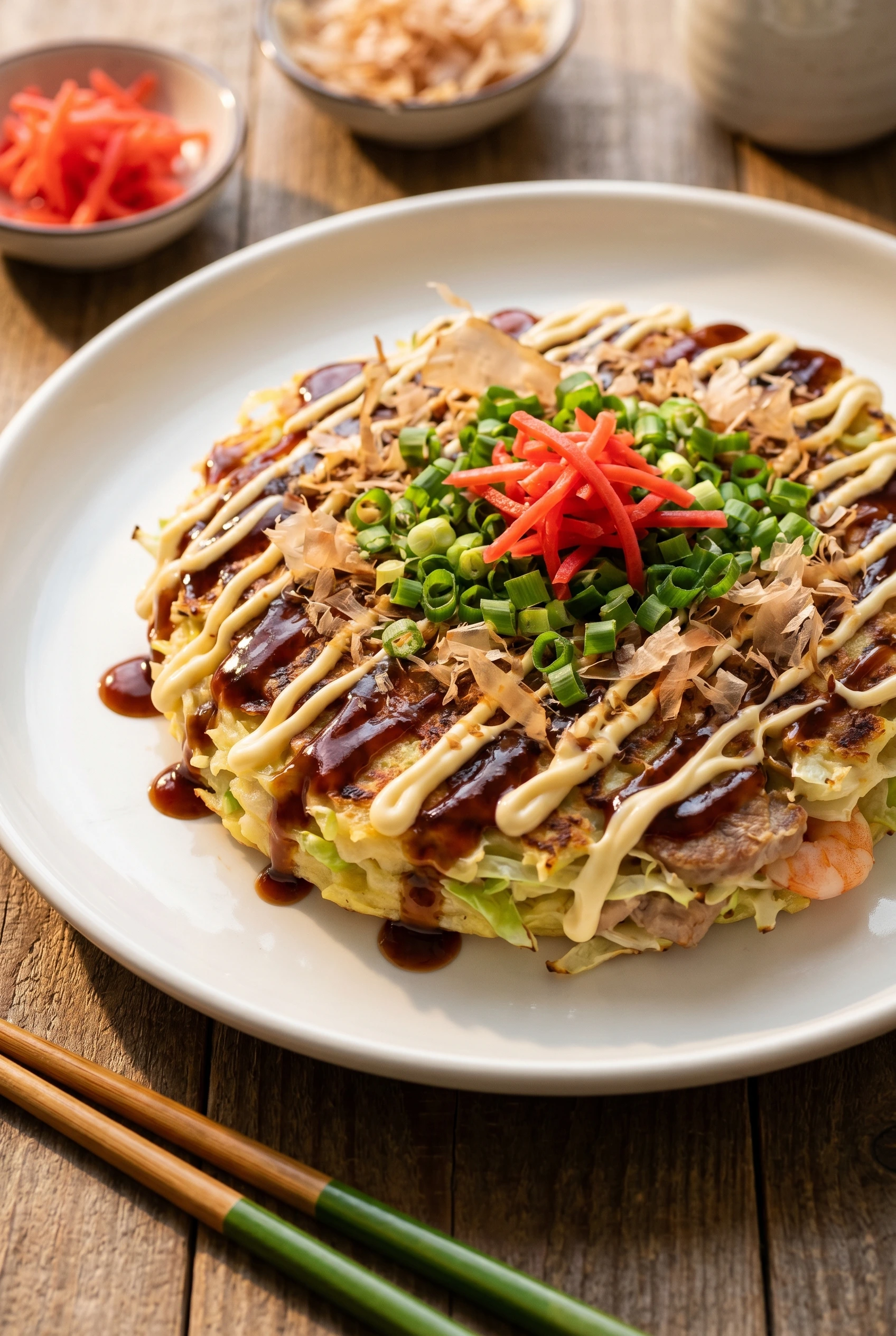
- Dress and serveTransfer to a plate with the pork belly side facing up. Brush the surface generously with okonomiyaki sauce. Squeeze Kewpie mayo across the top in a zigzag pattern. Scatter bonito flakes and aonori over everything and serve immediately before the flakes stop moving.