Ingredients
Equipment
Method
- Prep the oven and panPosition an oven rack in the bottom third of the oven and preheat to 350°F (177°C). Set a clean, completely dry, completely ungreased 9 or 10-inch tube pan nearby. Grease on the pan surface prevents the batter from climbing the sides and produces a flat, collapsed cake.
- Blitz the sugarPlace all 1¾ cups of granulated sugar into a food processor and blend for about 1 minute until finely ground. Remove 1 cup (200g) of the fine sugar and set it in a medium bowl. Leave the rest in the food processor.
- Make the flour mixtureAdd the cake flour and salt to the food processor with the remaining sugar. Pulse ten times until combined.
- Sift the reserved sugarSet a fine-mesh sieve over the medium bowl containing the reserved 1 cup of fine sugar and sift it through. Discard any large grains caught in the sieve.
- Sift the flour mixturePlace the same sieve over a large bowl and sift the flour and sugar mixture through it. Set this bowl aside.
- Whip the egg whitesCombine the room-temperature egg whites and cream of tartar in a large, completely grease-free mixing bowl. Beat on low speed with a stand mixer fitted with the whisk attachment until the whites turn frothy across the surface, about 1 minute.
- Add sugar to the whitesIncrease the mixer speed to medium and add the reserved 1 cup of fine sugar one tablespoon at a time, waiting a few seconds between additions. Once all the sugar incorporates, beat until the whites reach soft, glossy peaks that flop over at the tip when the whisk lifts out. This takes about 5 minutes total. Add the vanilla and beat on low for ten seconds. Stiff peaks prevent the cake from rising in the oven, so stop at the soft, floppy stage.
- Fold in the flourSift one-third of the flour and sugar mixture over the egg whites and fold gently with a wide silicone spatula using slow, sweeping strokes from the bottom of the bowl upward. Repeat with the second third, then the final third. Gentle folding preserves the air structure that makes this cake rise. Aggressive stirring produces a flat, dense result.
- Fill the panTransfer the batter into the ungreased tube pan and smooth the top with a spatula. Run a thin knife or skewer through the batter in a slow circle to release any large trapped air bubbles. Tap the pan gently on the counter twice.
- BakeBake for 35 to 40 minutes until the surface turns deep golden brown and a skewer inserted into the center comes out clean. The cake rises well above the pan rim during baking.
- Cool upside downInvert the pan immediately onto its built-in feet or onto the neck of a bottle if your pan has no feet. Leave the cake to cool completely upside down for at least 1 hour. Cooling right-side up allows gravity to compress the foam structure before it sets and produces a flat, dense disk rather than a tall sponge.
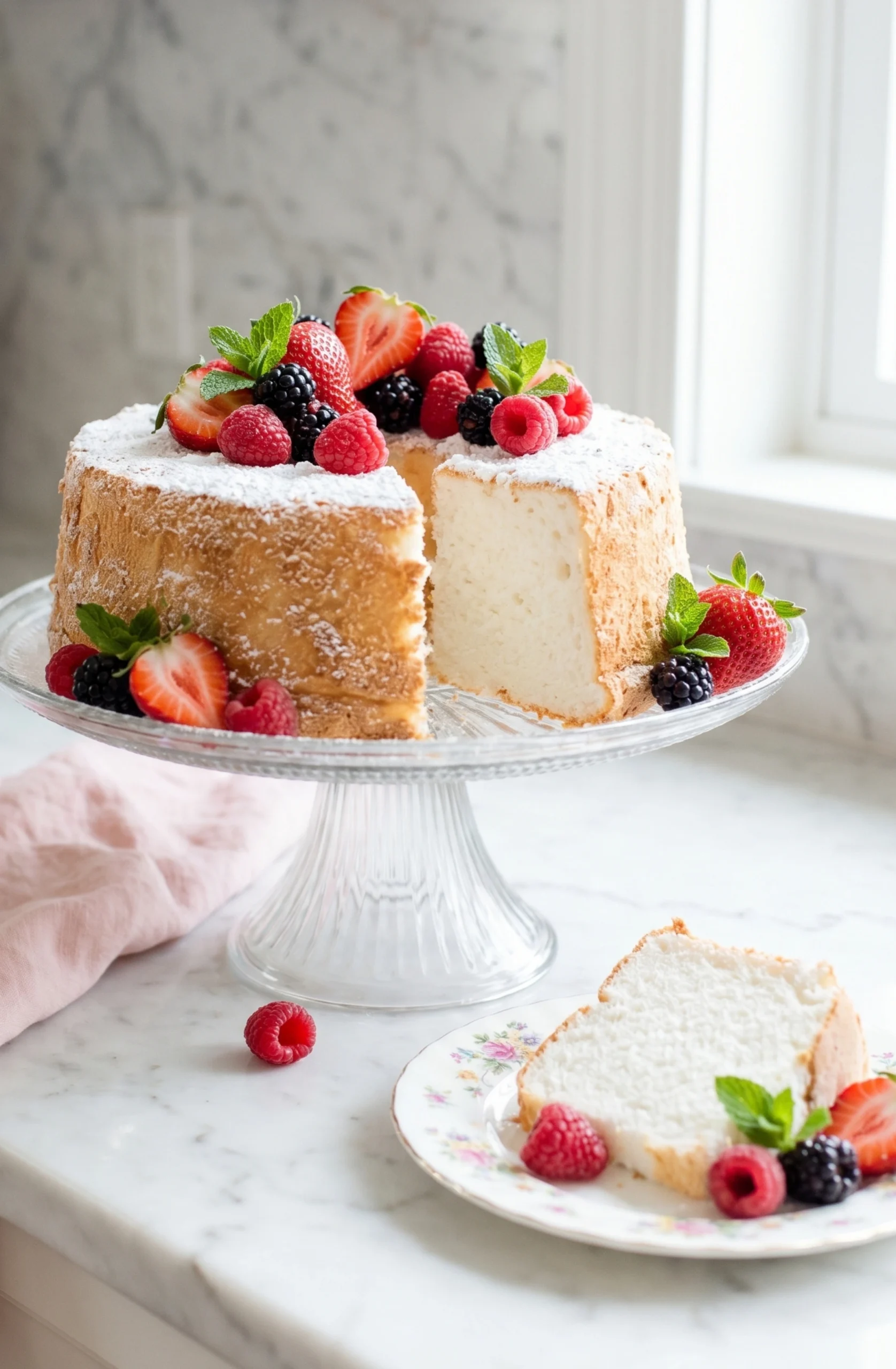
- Remove and serveRun a thin knife along the outer edge of the pan and around the center tube. Pull the center piece free, then run the knife along the bottom of the pan. Invert onto a cake stand and dust with powdered sugar if desired. Use a serrated bread knife to slice, since a standard chef's knife compresses the sponge flat with each cut.