Warm the milk and butter together over the stove or in the microwave. Warm the two together until the butter is *just* melted. You want the mixture lukewarm (105°F (41°C)-115°F (46°C)), not scorching hot. Set aside. Whisk the pumpkin puree, sugar, nutmeg, and salt together in a large bowl or in the bowl of your stand mixer. Whisk in the warmed milk/butter, egg, and yeast until combined. Using the dough hook or paddle attachment on low speed or mixing by hand using a silicone spatula or wooden spoon, mix in 1 cup of flour. Mix for 1 minute, scraping down the sides of the bowl as needed. Add 1 and 2/3 cups more flour and beat for 1 more minute. Keep the dough in the mixer (and switch to the dough hook if using the paddle) and beat for an additional 5 full minutes, or knead by hand on a lightly floured surface for 5 full minutes. (If you’re new to bread-baking, my How to Knead Dough video tutorial can help here.) If the dough becomes too sticky during the kneading process, sprinkle 1 teaspoon of flour at a time on the dough or on the work surface/in the bowl to make a soft, slightly tacky dough. Do not add more flour than you need because you do not want a dry dough. After kneading, the dough should still feel a little soft. Poke it with your finger if it slowly bounces back, your dough is ready to rise. You can also do a “windowpane test” to see if your dough has been kneaded long enough: tear off a small (roughly golfball-size) piece of dough and gently stretch it out until it’s thin enough for light to pass through it. Hold it up to a window or light. Does light pass through the stretched dough without the dough tearing first? If so, your dough has been kneaded long enough and is ready to rise. If not, keep kneading until it passes the windowpane test. Lightly grease a large bowl with oil or use nonstick spray. Place the dough in the bowl, turning it to coat all sides in the oil. Cover the bowl with aluminum foil, plastic wrap, or a clean kitchen towel. Allow the dough to rise in a relatively warm environment for 2 hours or until double in size. (I always let it rise on the counter and it takes about 2 hours. For a tiny reduction in rise time, see my answer to Where Should Dough Rise? in my Baking with Yeast Guide.) Grease the bottom and sides of a 9-inch square baking dish, 9-inch round baking dish, 9×13-inch baking dish, or 11×7-inch baking dish. This recipe yields 10-12 rolls and they can fit into any of those size pans.
Punch down the dough to release the air. Place dough on a lightly floured work surface and using a lightly floured rolling pin, roll dough into a 10×14-inch rectangle. Make sure the dough is smooth and evenly thick. If the dough keeps shrinking as you roll it out, stop what you’re doing, cover it lightly, and let it rest for 10 minutes to relax the gluten. When you return to the dough, it should stretch out much easier.
Spread softened butter evenly on top of the rolled-out dough. Combine the brown sugar, cinnamon, and spices into a small bowl. Sprinkle all over the top. Roll it up tightly. Using a very sharp knife, cut into 10-12 even rolls. Arrange rolls in the prepared pan.
Cover the rolls tightly and allow to rise until doubled in size, about 1 hour. (Or use the overnight option below.)
Preheat oven to 350°F (177°C).
Bake rolls for about 22-28 minutes or until they are lightly browned on top. After about 15 minutes, tent a piece of aluminum foil over the top of the pan to prevent the tops from browning too quickly and baking unevenly. Remove pan from the oven and place pan on a wire rack for about 10 minutes as you make the icing.
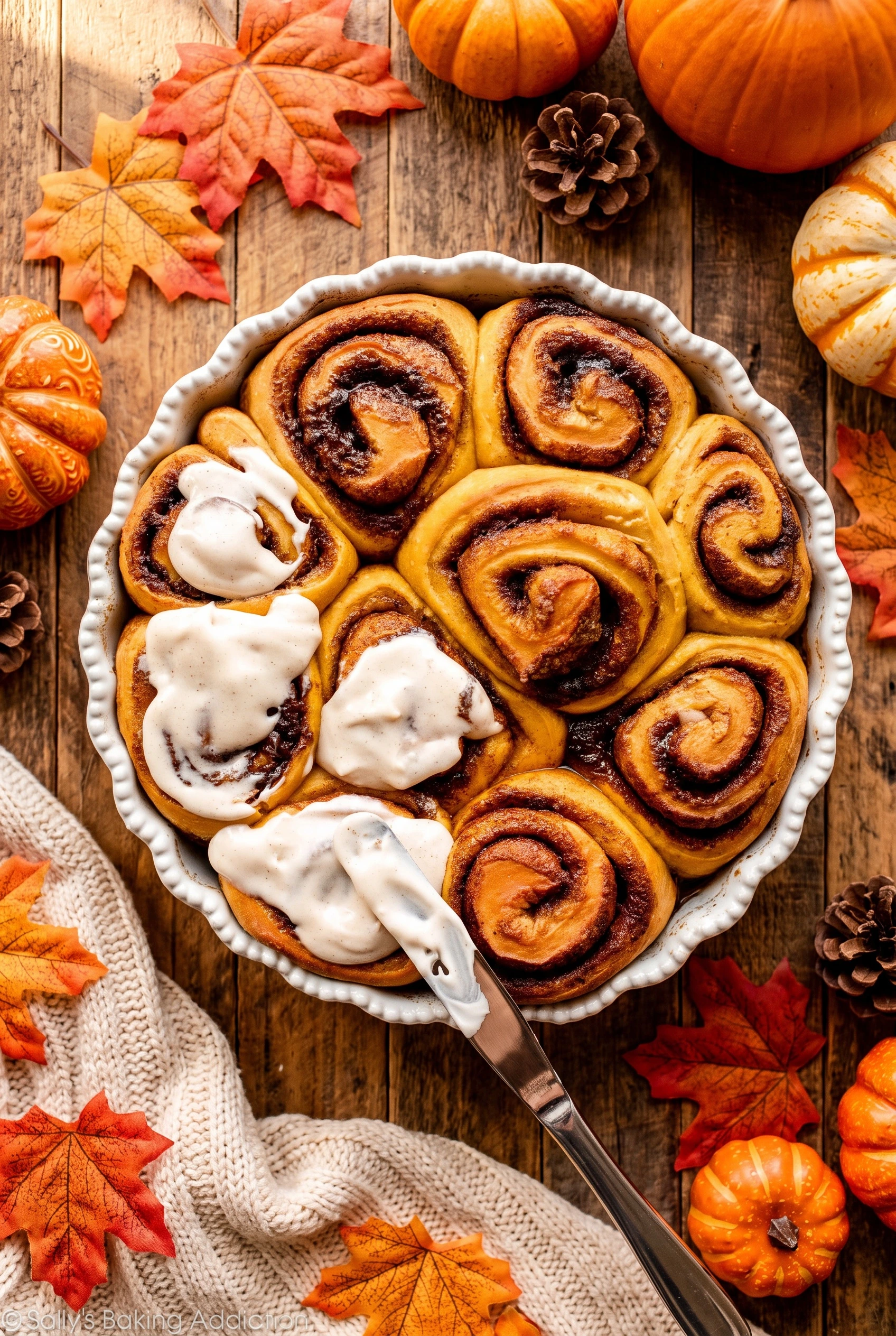
Using a handheld or stand mixer fitted with a paddle or whisk attachment, beat the softened cream cheese in a medium bowl on medium speed until smooth. Add the maple syrup and milk and beat on high until smooth. Add the confectioners’ sugar (and cinnamon, if using) and beat on medium speed until creamy. Spread on warm cinnamon rolls.
Cover leftover frosted or unfrosted rolls tightly and store at room temperature for up to 2 days or in the refrigerator for up to 5 days.