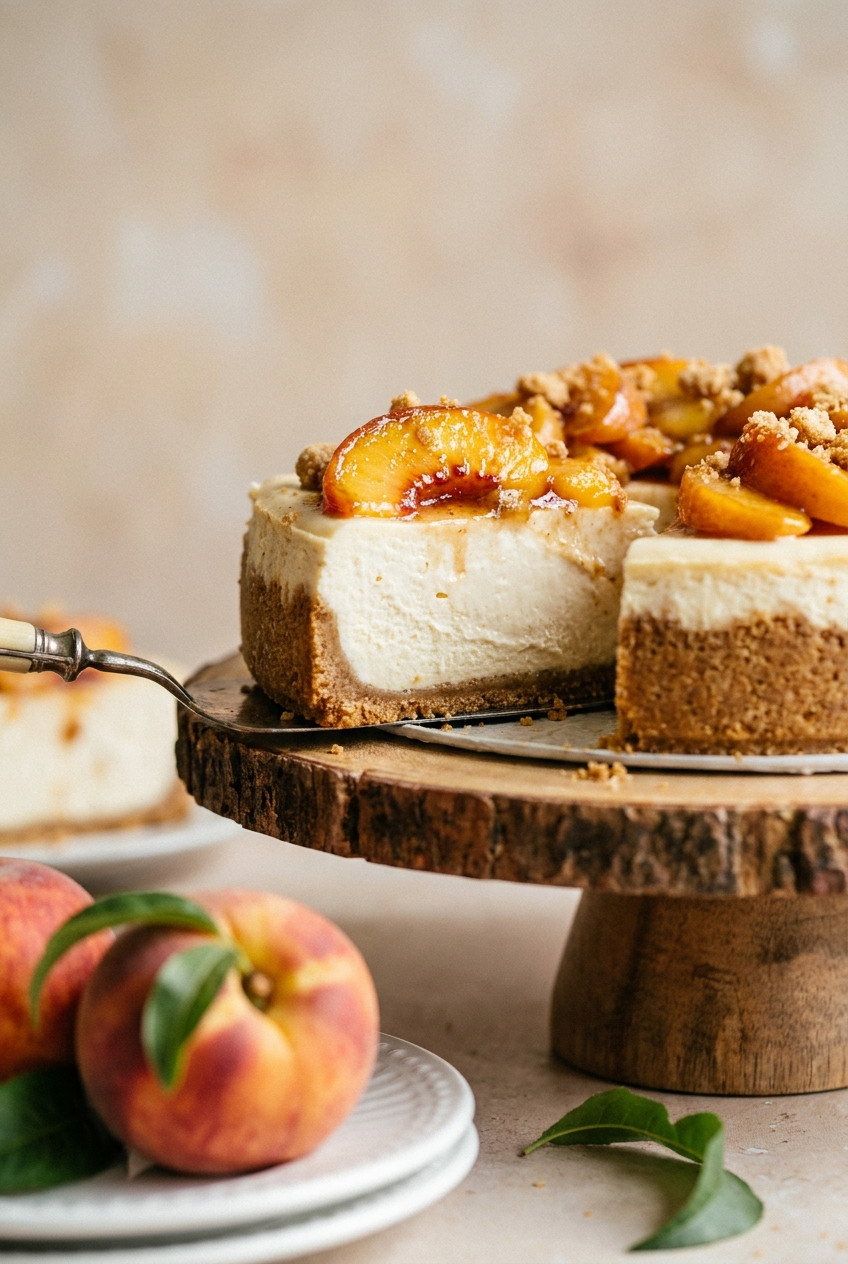
- 10 medium ripe peaches divided (*See note for frozen peaches)
- 5 tbsp granulated sugar (66 grams)
- 1 and 1/2 tsp cinnamon
- 1/4 tsp nutmeg
- 1/2 cup salted butter melted (113 grams - See note below if mixture seems dry)
- 3 cups graham cracker crumbs (276 grams)
- 1/2 cup salted butter melted (113 grams)
- 2/3 cup brown sugar (147 grams)
- 1 cup + 2 tbsp all-purpose flour (146 grams)
- 1/2 tsp cinnamon
- pinch of salt
- 32 ounces full-fat block-style cream cheese at room temp (904 grams)
- 1 and 1/2 cups granulated sugar (315 grams)
- 4 large eggs at room temp
- 3/4 cup sour cream at room temp (180 grams)
- 1 tbsp vanilla extract
- 1 and 1/2 tsp corn starch
9-inch springform pan
Electric mixer
10-inch metal cake pan
Roast the first batch of peachesPreheat the oven to 400°F (204°C). Slice half the peaches, toss them with half the sugar and spices, and spread them on a rimmed baking sheet. Roast for 15 minutes until the edges caramelize and the juices pool on the pan. Pour those juices into a jar and save them. They go over the finished slices at serving time. Make the crustStir the graham cracker crumbs and melted butter together until the crumbs resemble wet sand. Press the mixture firmly into the bottom and up the sides of the springform pan using the flat base of a measuring cup. Pre-bake at 325°F (163°C) for 10 minutes. Set aside to cool. Bake the streuselReduce the oven to 325°F. Stir together the melted butter, brown sugar, flour, cinnamon, and salt until clumps form. Spread across a parchment-lined baking sheet and bake for 12 to 15 minutes until golden and crumbly. Break up any large pieces and let it cool completely before assembly. Mix the cheesecake batterBeat the room-temperature cream cheese and sugar together on medium speed until completely smooth, about 3 minutes. Add the eggs one at a time, mixing on low after each addition just until incorporated. Overmixing after the eggs go in whips air into the batter, which causes the filling to puff up and then crack as it cools. Add the sour cream, vanilla extract, and cornstarch, and mix on low until the batter looks uniform. Assemble the layersPour half the batter into the cooled crust. Arrange the roasted peaches in an even layer over the batter and scatter half the streusel across the top. Pour the remaining batter over the streusel layer and smooth the surface. This hidden streusel layer inside the cheesecake peach cobbler is what produces that unexpected crunch in the middle of each slice. Bake in the water bathSet the filled springform pan inside the 10-inch metal cake pan. Place both pans inside a large roasting pan. Pour boiling water into the roasting pan until it reaches halfway up the side of the metal cake pan. According to Serious Eats, a water bath regulates the oven temperature around the cheesecake and prevents the top from drying out and cracking. Bake at 325°F for 80 to 95 minutes until the edges set and the center holds a slight jiggle. Cool slowlyTurn the oven off, crack the door open two inches, and leave the cheesecake inside for one full hour. Transfer to the counter to cool completely, then refrigerate for at least 6 hours before slicing. A warm cheesecake slices into a soft, structureless mess. Roast the topping peachesBefore serving, slice the remaining peaches, toss with the remaining sugar and spices, and roast at 400°F for 15 minutes. Spoon the warm peaches over the chilled cheesecake along with the reserved pan juices and the remaining streusel.
Recipe Notes
🍑 Roast the topping peaches fresh right before serving.
Roasted peaches stored overnight on top of a cold cheesecake release moisture, turn soft, and lose their caramelized edges by morning. Roast the first batch for the filling the day before, then roast a fresh batch for the topping right before slicing and serving. The ten-minute difference in freshness makes the whole presentation look intentional. ✅
🧀 Room-temperature cream cheese is not optional.
Cold cream cheese straight from the fridge produces a lumpy batter that no amount of mixing fully smooths out. Leave all four blocks on the counter for at least two hours before starting. A smooth, lump-free batter produces a filling that sets evenly and slices cleanly after chilling. 🔥
🌊 The metal cake pan eliminates water bath anxiety.
Wrapping a springform pan in foil always risks a slow water leak through the seam. Sitting the springform inside a 10-inch metal cake pan removes that risk entirely. The cake pan sits in the roasting pan water and acts as a waterproof barrier between the boiling water and the crust. Use this method every single time. 💧