Ingredients
Equipment
Method
- Prep the pansPreheat the oven to 350°F (175°C). Generously grease the bottom and sides of two 8-inch round cake pans with butter, then line the bottoms with parchment paper circles. For extra-flat layers, wrap a bake-even strip around each pan or make a DIY version by soaking a strip of old towel in water, wringing it out until damp (not dripping), and securing it around the pan with a safety pin. It sounds unhinged. It works perfectly.
- Mix the dry ingredientsIn a small bowl, whisk together the cake flour, baking powder, and salt. Set aside. A fork whisk works fine here no need to dirty a second bowl.
- Cream the butter and sugarIn a large mixing bowl, beat the softened butter and granulated sugar with an electric mixer on medium-high speed for about 2 minutes, until visibly lighter and fluffy. Add the cooled melted chocolate and eggs, and beat to combine. Make absolutely sure the chocolate has cooled even slightly warm chocolate can partially cook the eggs and ruin the batter texture.
- Build the batterDissolve the baking soda in the 2 tablespoons of hot tap water, then add to the batter. Add half the chocolate milk and stir by hand with a spatula. Add half the flour mixture and mix gently. Repeat with the remaining chocolate milk and flour. Mix only until just combined overmixing develops gluten and turns your chocolate velvet cake into a dense, rubbery brick.
- Bake the cakesDivide the batter evenly between both prepared pans approximately 2¼ cups per pan. Bake for 30–32 minutes, until a toothpick inserted in the center comes out clean or with just a few moist crumbs attached. Remove from the oven and cool in the pans on a wire rack for 10 minutes before turning out.
- Cool completelyTurn the layers out onto the wire rack and cool completely at least 1 full hour. Peel off the parchment circles. If the tops have domed, level them with a serrated knife and eat the dome as a baker's tax. Warm cake plus buttercream equals structural collapse do not rush this step.
- Make the buttercreamBeat the softened butter with an electric mixer until smooth and fluffy. Add the cocoa powder and mix by hand with a spatula first to avoid a brown dust explosion in your kitchen. Then begin adding the powdered sugar 1–2 cups at a time, mixing by hand first and then with the mixer. Continue until the frosting is smooth, fluffy, and tastes correct to you. Mandatory taste testing applies here.
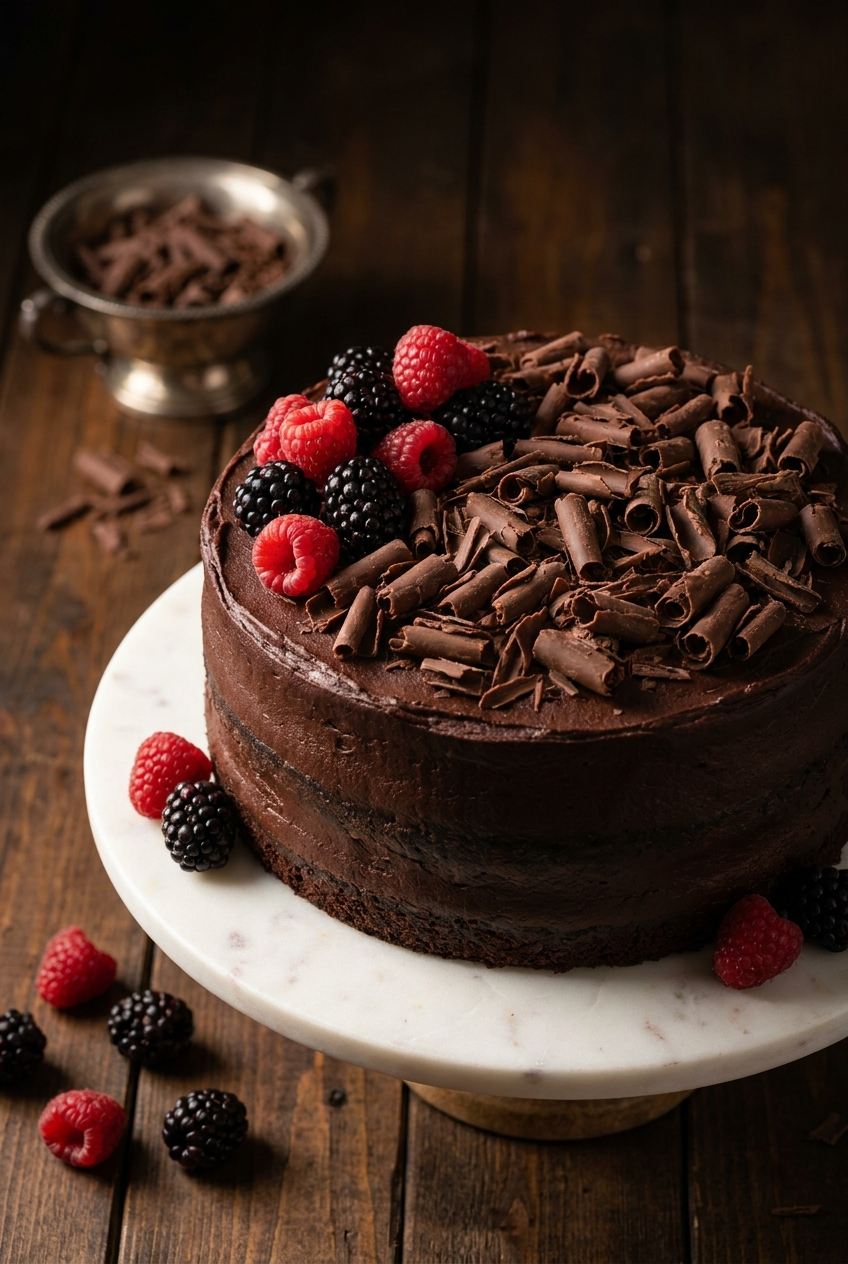
- Assemble the naked cakeSpread a small dab of buttercream onto an 8-inch cake board or serving plate this anchors the bottom layer so it doesn't slide. Place the first cake layer on top. Add a generous cup of buttercream to the top of the first layer and spread evenly. Stack the second layer on top. Frost the top of the cake fully, then apply a thin layer to the sides with a small offset spatula just enough to lightly coat them, leaving the cake layers partially visible. This is the naked cake look: intentionally exposed, effortlessly elegant.
- Garnish and serveTop with fresh raspberries, blackberries, and chocolate shavings. For the shavings, warm a chocolate bar briefly in your hands for about 30 seconds, then drag a vegetable peeler firmly along the edge. You will look like you tried significantly harder than you did.